


 0

 0


Syringe Filters
Shimadzu's syringe filters cover the eight membrane chemistries most commonly used in analytical and biological sample preparation, in the diameters and pore sizes matched to routine HPLC, LC-MS and microbiology work. Choose by sample matrix, downstream method and whether the workflow needs sterility.
Product Listing
-
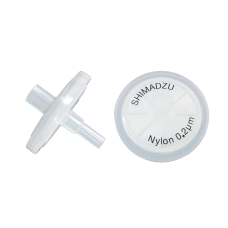
Description:
Syringe filter order guideline Choosing the right membrane is important. The wrong membrane could cause loss of valuable samples, time and money. Please use below guideline and chemical compatibility table as reference. Hydrophilic Nylon pH 6-13 Naturally hydrophilic, high protein binding, high dirt-loading, surfactant-free and offer the lowest extractables. Filtering of general samples and organic solvents. Not recommended for use with acids. Hydrophilic PVDF (polyvinylidene fluoride) pH 3-12 Extremely low protein binding. Good chemical compatibility. For filtration of non-aggressive aqueous and mild organic solutions, or when maximizing protein recovery is important. Hydrophilic RC (regenerated cellulose) pH 3-12 Hydrophilic membrane with good solvent resistance. Low protein binding and extractables. Good chemical compatibility with nearly all common HPLC solvents and stable against DMSO. Good for general filtration, tissue culture media filtration or life science applications. Hydrophilic PES (polyethersulfone) pH 3-12 Low protein binding and extractables. Good for life science applications. PTFE pH 1-14 High chemical compatibility. High temperature resistance. Good for filtration of gases, aggressive chemicals, and strong acid. Cellulose Acetate (CA) pH 4-8 Low protein binding For filtration of aqueous solutions Good for applications involving culture media Mixed Cellulose Ester (MCE) pH 4-8 High protein binding Good for general filtration of aqueous solutions.
IN STOCKSyringe filter order guideline Choosing the right membrane is important. The wrong membrane could cause loss of valuable samples, time and money. Please use below guideline and chemical compatibility table as reference. Hydrophilic Nylon pH 6-13 Naturally hydrophilic, high protein binding, high dirt-loading, surfactant-free and offer the lowest extractables. Filtering of general samples and organic solvents. Not recommended for use with acids. Hydrophilic PVDF (polyvinylidene fluoride) pH 3-12 Extremely low protein binding. Good chemical compatibility. For filtration of non-aggressive aqueous and mild organic solutions, or when maximizing protein recovery is important. Hydrophilic RC (regenerated cellulose) pH 3-12 Hydrophilic membrane with good solvent resistance. Low protein binding and extractables. Good chemical compatibility with nearly all common HPLC solvents and stable against DMSO. Good for general filtration, tissue culture media filtration or life science applications. Hydrophilic PES (polyethersulfone) pH 3-12 Low protein binding and extractables. Good for life science applications. PTFE pH 1-14 High chemical compatibility. High temperature resistance. Good for filtration of gases, aggressive chemicals, and strong acid. Cellulose Acetate (CA) pH 4-8 Low protein binding For filtration of aqueous solutions Good for applications involving culture media Mixed Cellulose Ester (MCE) pH 4-8 High protein binding Good for general filtration of aqueous solutions.
-
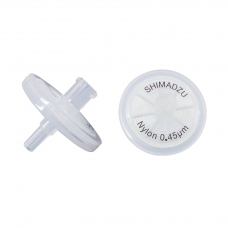
Description:
Syringe filter order guideline Choosing the right membrane is important. The wrong membrane could cause loss of valuable samples, time and money. Please use below guideline and chemical compatibility table as reference. Hydrophilic Nylon pH 6-13 Naturally hydrophilic, high protein binding, high dirt-loading, surfactant-free and offer the lowest extractables. Filtering of general samples and organic solvents. Not recommended for use with acids. Hydrophilic PVDF (polyvinylidene fluoride) pH 3-12 Extremely low protein binding. Good chemical compatibility. For filtration of non-aggressive aqueous and mild organic solutions, or when maximizing protein recovery is important. Hydrophilic RC (regenerated cellulose) pH 3-12 Hydrophilic membrane with good solvent resistance. Low protein binding and extractables. Good chemical compatibility with nearly all common HPLC solvents and stable against DMSO. Good for general filtration, tissue culture media filtration or life science applications. Hydrophilic PES (polyethersulfone) pH 3-12 Low protein binding and extractables. Good for life science applications. PTFE pH 1-14 High chemical compatibility. High temperature resistance. Good for filtration of gases, aggressive chemicals, and strong acid. Cellulose Acetate (CA) pH 4-8 Low protein binding For filtration of aqueous solutions Good for applications involving culture media Mixed Cellulose Ester (MCE) pH 4-8 High protein binding Good for general filtration of aqueous solutions.
IN STOCKSyringe filter order guideline Choosing the right membrane is important. The wrong membrane could cause loss of valuable samples, time and money. Please use below guideline and chemical compatibility table as reference. Hydrophilic Nylon pH 6-13 Naturally hydrophilic, high protein binding, high dirt-loading, surfactant-free and offer the lowest extractables. Filtering of general samples and organic solvents. Not recommended for use with acids. Hydrophilic PVDF (polyvinylidene fluoride) pH 3-12 Extremely low protein binding. Good chemical compatibility. For filtration of non-aggressive aqueous and mild organic solutions, or when maximizing protein recovery is important. Hydrophilic RC (regenerated cellulose) pH 3-12 Hydrophilic membrane with good solvent resistance. Low protein binding and extractables. Good chemical compatibility with nearly all common HPLC solvents and stable against DMSO. Good for general filtration, tissue culture media filtration or life science applications. Hydrophilic PES (polyethersulfone) pH 3-12 Low protein binding and extractables. Good for life science applications. PTFE pH 1-14 High chemical compatibility. High temperature resistance. Good for filtration of gases, aggressive chemicals, and strong acid. Cellulose Acetate (CA) pH 4-8 Low protein binding For filtration of aqueous solutions Good for applications involving culture media Mixed Cellulose Ester (MCE) pH 4-8 High protein binding Good for general filtration of aqueous solutions.
-
Description:
Syringe filter order guideline Choosing the right membrane is important. The wrong membrane could cause loss of valuable samples, time and money. Please use below guideline and chemical compatibility table as reference. Hydrophilic Nylon pH 6-13 Naturally hydrophilic, high protein binding, high dirt-loading, surfactant-free and offer the lowest extractables. Filtering of general samples and organic solvents. Not recommended for use with acids. Hydrophilic PVDF (polyvinylidene fluoride) pH 3-12 Extremely low protein binding. Good chemical compatibility. For filtration of non-aggressive aqueous and mild organic solutions, or when maximizing protein recovery is important. Hydrophilic RC (regenerated cellulose) pH 3-12 Hydrophilic membrane with good solvent resistance. Low protein binding and extractables. Good chemical compatibility with nearly all common HPLC solvents and stable against DMSO. Good for general filtration, tissue culture media filtration or life science applications. Hydrophilic PES (polyethersulfone) pH 3-12 Low protein binding and extractables. Good for life science applications. PTFE pH 1-14 High chemical compatibility. High temperature resistance. Good for filtration of gases, aggressive chemicals, and strong acid. Cellulose Acetate (CA) pH 4-8 Low protein binding For filtration of aqueous solutions Good for applications involving culture media Mixed Cellulose Ester (MCE) pH 4-8 High protein binding Good for general filtration of aqueous solutions.
IN STOCKSyringe filter order guideline Choosing the right membrane is important. The wrong membrane could cause loss of valuable samples, time and money. Please use below guideline and chemical compatibility table as reference. Hydrophilic Nylon pH 6-13 Naturally hydrophilic, high protein binding, high dirt-loading, surfactant-free and offer the lowest extractables. Filtering of general samples and organic solvents. Not recommended for use with acids. Hydrophilic PVDF (polyvinylidene fluoride) pH 3-12 Extremely low protein binding. Good chemical compatibility. For filtration of non-aggressive aqueous and mild organic solutions, or when maximizing protein recovery is important. Hydrophilic RC (regenerated cellulose) pH 3-12 Hydrophilic membrane with good solvent resistance. Low protein binding and extractables. Good chemical compatibility with nearly all common HPLC solvents and stable against DMSO. Good for general filtration, tissue culture media filtration or life science applications. Hydrophilic PES (polyethersulfone) pH 3-12 Low protein binding and extractables. Good for life science applications. PTFE pH 1-14 High chemical compatibility. High temperature resistance. Good for filtration of gases, aggressive chemicals, and strong acid. Cellulose Acetate (CA) pH 4-8 Low protein binding For filtration of aqueous solutions Good for applications involving culture media Mixed Cellulose Ester (MCE) pH 4-8 High protein binding Good for general filtration of aqueous solutions.
-
Description:
Syringe filter order guideline Choosing the right membrane is important. The wrong membrane could cause loss of valuable samples, time and money. Please use below guideline and chemical compatibility table as reference. Hydrophilic Nylon pH 6-13 Naturally hydrophilic, high protein binding, high dirt-loading, surfactant-free and offer the lowest extractables. Filtering of general samples and organic solvents. Not recommended for use with acids. Hydrophilic PVDF (polyvinylidene fluoride) pH 3-12 Extremely low protein binding. Good chemical compatibility. For filtration of non-aggressive aqueous and mild organic solutions, or when maximizing protein recovery is important. Hydrophilic RC (regenerated cellulose) pH 3-12 Hydrophilic membrane with good solvent resistance. Low protein binding and extractables. Good chemical compatibility with nearly all common HPLC solvents and stable against DMSO. Good for general filtration, tissue culture media filtration or life science applications. Hydrophilic PES (polyethersulfone) pH 3-12 Low protein binding and extractables. Good for life science applications. PTFE pH 1-14 High chemical compatibility. High temperature resistance. Good for filtration of gases, aggressive chemicals, and strong acid. Cellulose Acetate (CA) pH 4-8 Low protein binding For filtration of aqueous solutions Good for applications involving culture media Mixed Cellulose Ester (MCE) pH 4-8 High protein binding Good for general filtration of aqueous solutions.
OUT OF STOCKSyringe filter order guideline Choosing the right membrane is important. The wrong membrane could cause loss of valuable samples, time and money. Please use below guideline and chemical compatibility table as reference. Hydrophilic Nylon pH 6-13 Naturally hydrophilic, high protein binding, high dirt-loading, surfactant-free and offer the lowest extractables. Filtering of general samples and organic solvents. Not recommended for use with acids. Hydrophilic PVDF (polyvinylidene fluoride) pH 3-12 Extremely low protein binding. Good chemical compatibility. For filtration of non-aggressive aqueous and mild organic solutions, or when maximizing protein recovery is important. Hydrophilic RC (regenerated cellulose) pH 3-12 Hydrophilic membrane with good solvent resistance. Low protein binding and extractables. Good chemical compatibility with nearly all common HPLC solvents and stable against DMSO. Good for general filtration, tissue culture media filtration or life science applications. Hydrophilic PES (polyethersulfone) pH 3-12 Low protein binding and extractables. Good for life science applications. PTFE pH 1-14 High chemical compatibility. High temperature resistance. Good for filtration of gases, aggressive chemicals, and strong acid. Cellulose Acetate (CA) pH 4-8 Low protein binding For filtration of aqueous solutions Good for applications involving culture media Mixed Cellulose Ester (MCE) pH 4-8 High protein binding Good for general filtration of aqueous solutions.
-
Description:
Syringe filter order guideline Choosing the right membrane is important. The wrong membrane could cause loss of valuable samples, time and money. Please use below guideline and chemical compatibility table as reference. Hydrophilic Nylon pH 6-13 Naturally hydrophilic, high protein binding, high dirt-loading, surfactant-free and offer the lowest extractables. Filtering of general samples and organic solvents. Not recommended for use with acids. Hydrophilic PVDF (polyvinylidene fluoride) pH 3-12 Extremely low protein binding. Good chemical compatibility. For filtration of non-aggressive aqueous and mild organic solutions, or when maximizing protein recovery is important. Hydrophilic RC (regenerated cellulose) pH 3-12 Hydrophilic membrane with good solvent resistance. Low protein binding and extractables. Good chemical compatibility with nearly all common HPLC solvents and stable against DMSO. Good for general filtration, tissue culture media filtration or life science applications. Hydrophilic PES (polyethersulfone) pH 3-12 Low protein binding and extractables. Good for life science applications. PTFE pH 1-14 High chemical compatibility. High temperature resistance. Good for filtration of gases, aggressive chemicals, and strong acid. Cellulose Acetate (CA) pH 4-8 Low protein binding For filtration of aqueous solutions Good for applications involving culture media Mixed Cellulose Ester (MCE) pH 4-8 High protein binding Good for general filtration of aqueous solutions.
IN STOCKSyringe filter order guideline Choosing the right membrane is important. The wrong membrane could cause loss of valuable samples, time and money. Please use below guideline and chemical compatibility table as reference. Hydrophilic Nylon pH 6-13 Naturally hydrophilic, high protein binding, high dirt-loading, surfactant-free and offer the lowest extractables. Filtering of general samples and organic solvents. Not recommended for use with acids. Hydrophilic PVDF (polyvinylidene fluoride) pH 3-12 Extremely low protein binding. Good chemical compatibility. For filtration of non-aggressive aqueous and mild organic solutions, or when maximizing protein recovery is important. Hydrophilic RC (regenerated cellulose) pH 3-12 Hydrophilic membrane with good solvent resistance. Low protein binding and extractables. Good chemical compatibility with nearly all common HPLC solvents and stable against DMSO. Good for general filtration, tissue culture media filtration or life science applications. Hydrophilic PES (polyethersulfone) pH 3-12 Low protein binding and extractables. Good for life science applications. PTFE pH 1-14 High chemical compatibility. High temperature resistance. Good for filtration of gases, aggressive chemicals, and strong acid. Cellulose Acetate (CA) pH 4-8 Low protein binding For filtration of aqueous solutions Good for applications involving culture media Mixed Cellulose Ester (MCE) pH 4-8 High protein binding Good for general filtration of aqueous solutions.
-
Description:
Syringe filter order guideline Choosing the right membrane is important. The wrong membrane could cause loss of valuable samples, time and money. Please use below guideline and chemical compatibility table as reference. Hydrophilic Nylon pH 6-13 Naturally hydrophilic, high protein binding, high dirt-loading, surfactant-free and offer the lowest extractables. Filtering of general samples and organic solvents. Not recommended for use with acids. Hydrophilic PVDF (polyvinylidene fluoride) pH 3-12 Extremely low protein binding. Good chemical compatibility. For filtration of non-aggressive aqueous and mild organic solutions, or when maximizing protein recovery is important. Hydrophilic RC (regenerated cellulose) pH 3-12 Hydrophilic membrane with good solvent resistance. Low protein binding and extractables. Good chemical compatibility with nearly all common HPLC solvents and stable against DMSO. Good for general filtration, tissue culture media filtration or life science applications. Hydrophilic PES (polyethersulfone) pH 3-12 Low protein binding and extractables. Good for life science applications. PTFE pH 1-14 High chemical compatibility. High temperature resistance. Good for filtration of gases, aggressive chemicals, and strong acid. Cellulose Acetate (CA) pH 4-8 Low protein binding For filtration of aqueous solutions Good for applications involving culture media Mixed Cellulose Ester (MCE) pH 4-8 High protein binding Good for general filtration of aqueous solutions.
OUT OF STOCKSyringe filter order guideline Choosing the right membrane is important. The wrong membrane could cause loss of valuable samples, time and money. Please use below guideline and chemical compatibility table as reference. Hydrophilic Nylon pH 6-13 Naturally hydrophilic, high protein binding, high dirt-loading, surfactant-free and offer the lowest extractables. Filtering of general samples and organic solvents. Not recommended for use with acids. Hydrophilic PVDF (polyvinylidene fluoride) pH 3-12 Extremely low protein binding. Good chemical compatibility. For filtration of non-aggressive aqueous and mild organic solutions, or when maximizing protein recovery is important. Hydrophilic RC (regenerated cellulose) pH 3-12 Hydrophilic membrane with good solvent resistance. Low protein binding and extractables. Good chemical compatibility with nearly all common HPLC solvents and stable against DMSO. Good for general filtration, tissue culture media filtration or life science applications. Hydrophilic PES (polyethersulfone) pH 3-12 Low protein binding and extractables. Good for life science applications. PTFE pH 1-14 High chemical compatibility. High temperature resistance. Good for filtration of gases, aggressive chemicals, and strong acid. Cellulose Acetate (CA) pH 4-8 Low protein binding For filtration of aqueous solutions Good for applications involving culture media Mixed Cellulose Ester (MCE) pH 4-8 High protein binding Good for general filtration of aqueous solutions.
-
Description:
Syringe filter order guideline Choosing the right membrane is important. The wrong membrane could cause loss of valuable samples, time and money. Please use below guideline and chemical compatibility table as reference. Hydrophilic Nylon pH 6-13 Naturally hydrophilic, high protein binding, high dirt-loading, surfactant-free and offer the lowest extractables. Filtering of general samples and organic solvents. Not recommended for use with acids. Hydrophilic PVDF (polyvinylidene fluoride) pH 3-12 Extremely low protein binding. Good chemical compatibility. For filtration of non-aggressive aqueous and mild organic solutions, or when maximizing protein recovery is important. Hydrophilic RC (regenerated cellulose) pH 3-12 Hydrophilic membrane with good solvent resistance. Low protein binding and extractables. Good chemical compatibility with nearly all common HPLC solvents and stable against DMSO. Good for general filtration, tissue culture media filtration or life science applications. Hydrophilic PES (polyethersulfone) pH 3-12 Low protein binding and extractables. Good for life science applications. PTFE pH 1-14 High chemical compatibility. High temperature resistance. Good for filtration of gases, aggressive chemicals, and strong acid. Cellulose Acetate (CA) pH 4-8 Low protein binding For filtration of aqueous solutions Good for applications involving culture media Mixed Cellulose Ester (MCE) pH 4-8 High protein binding Good for general filtration of aqueous solutions.
OUT OF STOCKSyringe filter order guideline Choosing the right membrane is important. The wrong membrane could cause loss of valuable samples, time and money. Please use below guideline and chemical compatibility table as reference. Hydrophilic Nylon pH 6-13 Naturally hydrophilic, high protein binding, high dirt-loading, surfactant-free and offer the lowest extractables. Filtering of general samples and organic solvents. Not recommended for use with acids. Hydrophilic PVDF (polyvinylidene fluoride) pH 3-12 Extremely low protein binding. Good chemical compatibility. For filtration of non-aggressive aqueous and mild organic solutions, or when maximizing protein recovery is important. Hydrophilic RC (regenerated cellulose) pH 3-12 Hydrophilic membrane with good solvent resistance. Low protein binding and extractables. Good chemical compatibility with nearly all common HPLC solvents and stable against DMSO. Good for general filtration, tissue culture media filtration or life science applications. Hydrophilic PES (polyethersulfone) pH 3-12 Low protein binding and extractables. Good for life science applications. PTFE pH 1-14 High chemical compatibility. High temperature resistance. Good for filtration of gases, aggressive chemicals, and strong acid. Cellulose Acetate (CA) pH 4-8 Low protein binding For filtration of aqueous solutions Good for applications involving culture media Mixed Cellulose Ester (MCE) pH 4-8 High protein binding Good for general filtration of aqueous solutions.
Types of Syringe Filters Available at Shimadzu Singapore
Nylon Syringe Filter
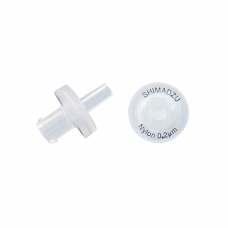
Nylon syringe filters are a popular choice due to its natural hydrophilicity and broad chemical compatibility, making it an excellent general-purpose filter for aqueous and most organic solvent mixtures. Its nylon membrane offers high flow rates while maintaining exceptional filtration efficiency at removing particulates from general samples, ensuring a clean matrix for subsequent analysis. Furthermore, its robust mechanical strength and high binding capacity for proteins and nucleic acids make it a versatile tool for both life science and general chemical laboratory applications.
At a glance:
- Best For: General-purpose filtration of aqueous samples and most organic solvent mixtures where analyte loss to the membrane is not a concern.
- Avoid: Protein-containing biological samples and nucleic acid work; nylon's high protein and nucleic-acid binding will strip target analytes. Switch to PVDF, PES or regenerated cellulose for those.
- Typical Use: HPLC sample clarification of aqueous and mixed-solvent samples, general laboratory particle removal, GC sample prep.
Hydrophobic PTFE
Characterised by its exceptional chemical compatibility, high-temperature resistance, and robust construction, hydrophobic PTFE syringe filters are specifically designed for handling aggressive chemicals, strong acids, and organic solvents that would degrade other membranes. Its inherent hydrophobic nature means it is not wetted by aqueous solutions, making it ideal for the filtration of gases and non-polar liquids, venting applications, and preparing non-aqueous samples for analysis.
At a glance:
- Best For: Aggressive chemicals, strong acids, non-polar organic solvents, gases and venting applications.
- Avoid: Aqueous samples without pre-wetting; the membrane will not wet with water alone. Use hydrophilic PTFE instead when the workflow can't accommodate a pre-wet step.
- Typical Use: HPLC mobile phase preparation, GC sample filtering, gas filtration and venting.
Hydrophilic PTFE
Hydrophilic PTFE syringe filters are a unique class of membranes that combine the broad chemical resistance of PTFE with the ability to be wetted by aqueous solutions without the need for a pre-wetting step. This makes them a versatile choice for filtering a wide variety of samples including both organic and aqueous solutions. Their low-binding properties and durability make them a reliable tool for preparing samples for sensitive analytical techniques, especially in applications where both chemical compatibility and ease of use are critical.
At a glance:
- Best For: Mixed aqueous and organic samples where broad chemical compatibility matters and pre-wetting isn't practical.
- Avoid: Almost nothing at typical HPLC pH; hydrophilic PTFE is the flexible pick when membrane compatibility is uncertain.
- Typical Use: LC-MS sample prep, method development across sample types, sterile aqueous filtration in the 0.22 µm 33 mm variant.
Cellulose Acetate
Cellulose acetate syringe filters have high flow rates and low protein binding, making them a preferred choice for filtering aqueous solutions and biological samples, especially those containing sensitive proteins. Its hydrophilic nature ensures it wets instantly for fast and efficient filtration, making it a reliable tool for general laboratory filtration that demands speed and minimal protein loss. It is also suitable for sterilisation and clarification of cell culture media and buffers in a laboratory setting.
At a glance:
- Best For: Aqueous biological samples requiring low protein binding and fast throughput.
- Avoid: Aggressive organic solvents and strong acids; chemical compatibility is limited. Use PTFE for those.
- Typical Use: Cell culture media and buffer clarification, general aqueous biological workflows where speed matters.
Polyethersulfone (PES)
The polyethersulfone (PES) syringe filter is highly regarded for its low protein binding and minimal extractables. This makes it a superior choice for preparing biological samples as it minimises the loss of target analytes and reduces the risk of sample contamination. The PES membrane also provides a high flow rate which is beneficial for filtering larger volumes of aqueous solutions. Its durability and excellent chemical resistance to a wide range of solvents ensure reliable and reproducible results in various applications, from cell culture media preparation to environmental analysis.
At a glance:
- Best For: Biological samples where protein recovery and low extractables are both required.
- Avoid: Strong acids or ketones at high concentrations; chemical compatibility is limited outside the aqueous and mild-organic range.
- Typical Use: Cell culture media prep, environmental sample filtration, protein-containing HPLC methods, ion chromatography samples.
Polyvinylidene Fluoride (PVDF)
Polyvinylidene Fluoride (PVDF) syringe filters are ideal for filtering non-aggressive aqueous and mild organic solutions. Its key benefit lies in its exceptionally low protein binding, making it an ideal choice for sterile filtration applications where maximising protein recovery is crucial such as protein chromatography and proteomics sample preparation. These filters also exhibit good chemical resistance to a broad range of solvents, providing reliability and ensuring sample integrity.
At a glance:
- Best For: Sterile filtration of protein-containing samples where maximum recovery matters.
- Avoid: Aggressive halogenated solvents and strong bases; chemical compatibility drops sharply outside near-neutral aqueous and mild-organic conditions.
- Typical Use: Proteomics sample prep, protein chromatography clarification, cell culture supernatants.
Mixed Cellulose Esters (MCE)
Mixed cellulose esters (MCE) syringe filters are an economical option for general filtration of aqueous solutions. The membrane is a blend of cellulose nitrate and cellulose acetate which results in a naturally hydrophilic filter with high protein binding. This makes it suitable for particle analysis, gravimetric analysis, and microbiology, amongst other applications. Due to its high flow rate and excellent porosity, MCE syringe filters are often used for quick clarification of samples, providing a fast and reliable method for removing particulates from water-based liquids.
At a glance:
- Best For: Aqueous particle analysis, gravimetric analysis and microbiology sample prep where the membrane's high protein binding is not a problem.
- Avoid: Any workflow requiring protein or nucleic acid recovery; MCE binds proteins strongly. Use PVDF, PES or regenerated cellulose instead.
- Typical Use: Microbial monitoring, particulate quantification, water and buffer clarification.
Regenerated Cellulose
Regenerated cellulose (RC) syringe filters combine very low protein binding with hydrophilic wetting across both aqueous and moderately organic sample matrices. This makes them a broadly compatible choice for sensitive HPLC and LC-MS methods, where the membrane needs to hold up across water, methanol, acetonitrile and buffered aqueous mobile phases without contributing extractables or stripping analytes.
At a glance:
- Best For: HPLC and LC-MS sample prep where broad membrane compatibility and low protein binding both matter.
- Avoid: Strong acids, strong bases and prolonged exposure to aggressive halogenated solvents; use hydrophobic PTFE for those.
- Typical Use: General HPLC filtration when the analyte class is mixed, LC-MS method development, quantitative aqueous work.
Choosing the Right Pore Size
Shimadzu stocks syringe filters in two pore sizes, chosen to match the particle load in the sample and the sensitivity of the downstream method. The choice between them comes down to whether the sample carries fine biological matter and whether the workflow needs sterility.
0.45 µm: General Particulate Removal and HPLC Column Protection
The 0.45 µm pore size is the standard choice for general clarification of samples before HPLC injection. It removes particulates large enough to clog column inlets and frits while maintaining a high flow rate and low back pressure at reasonable sample volumes. For most reversed-phase HPLC work on well-conditioned columns, 0.45 µm is the working default.
0.22 µm: Fine Particulate and Sterilising Grade
The 0.22 µm pore size removes finer particulate and, critically, bacterial cells. It is the sterilising grade used for cell culture media, buffers and reagents in medical and pharmaceutical workflows, and it is the standard for LC-MS sample prep where any particulate can foul the ion source. The trade-off is higher filtration pressure and slower throughput at large sample volumes.
Effect on Filtration Pressure and Throughput
Smaller pore sizes need more membrane surface area to sustain the same flow. In practice, a 0.22 µm filter takes noticeably more syringe pressure than a 0.45 µm filter on the same sample volume, and it will clog faster on turbid or protein-rich samples. Scaling the filter diameter up for larger volumes offsets the pressure penalty, which is why the how-to-choose section below leads with sample volume rather than pore size.
How to Choose and Use a Syringe Filter
Choosing the right syringe filter is a five-step decision. Work through them in order because each step narrows the shortlist for the next one.
1. Sample Volume Sets the Filter Diameter
Shimadzu stocks syringe filters in five diameters (4 mm, 13 mm, 17 mm, 25 mm and 33 mm) matched to sample volume. Under 1 mL, use 4 mm to minimise dead volume. Between 1 and 10 mL, use 13 or 17 mm. Between 10 and 100 mL, use 25 or 33 mm. Using the correct diameter ensures adequate throughput without the pressure buildup that damages the membrane or compromises the sample.
2. Match the Membrane to the Solvent
Chemical compatibility between the sample matrix and the membrane is the second gate. Aqueous samples work with nylon, hydrophilic PTFE, PES, PVDF, cellulose acetate, MCE and regenerated cellulose. Aggressive organic solvents and strong acids need hydrophobic PTFE. Biological samples containing target proteins need PVDF, PES or regenerated cellulose to avoid analyte loss to the membrane. See the Types section above for the full compatibility picture per membrane.
3. Choose the Pore Size
Once the membrane is set, pick the pore size for the job. Use 0.45 µm for general clarification before HPLC on well-conditioned columns. Use 0.22 µm for LC-MS sample prep and for sterile filtration of buffers, media and reagents. See the Choosing the Right Pore Size section above for the pressure and throughput trade-offs.
4. Sterile or Non-Sterile
If the downstream application requires sterility (cell culture, injectable formulations, sensitive microbiological work), the filter itself must be sterile. Shimadzu stocks sterile syringe filters in hydrophilic PTFE at both 0.22 µm and 0.45 µm in the 33 mm diameter. See the Sterile vs Non-Sterile section below for the full picture on which membranes are stocked sterile.
5. Pre-Wet the Membrane Where Needed
Hydrophobic PTFE will not wet with aqueous samples out of the pack. Pre-wet the membrane with a small volume of isopropanol or methanol before running the aqueous sample through, or switch to hydrophilic PTFE if pre-wetting isn't practical in your workflow. All other membranes in the Shimadzu range are hydrophilic and wet instantly with aqueous samples.
Once you have the right filter, technique matters. Hold the syringe vertical, apply steady pressure without forcing (excessive pressure ruptures the membrane and contaminates the filtrate), discard the first few drops if trace-level reproducibility matters, and never re-use the filter across samples.
Sterile vs Non-Sterile Syringe Filters
Sterile syringe filters carry a specific certification of microbial removal and come in packaging designed to preserve that sterility until the moment of use. Non-sterile filters clarify samples but make no sterility claim. Choosing between them is a downstream-application decision, not a preference.
When Sterility Is Required
Sterility is required whenever the filtered sample enters a biological system where contamination compromises the result or the safety of the outcome: cell culture media and reagents, buffers used in sensitive microbiological work, injectable formulations in pharmaceutical development, and any process where microbial growth downstream would invalidate the analysis. For routine HPLC sample clarification and analytical particle removal, non-sterile filters are appropriate and more economical.
Certification and Packaging
Sterile syringe filters are validated to a specified microbial removal grade, most commonly 0.22 µm as the routine sterilising standard, and come individually packaged in sealed foil pouches to protect the sterility barrier until opening. Gamma-irradiated or pre-sterilised options carry a certificate of sterilisation with each lot. Non-sterile filters are typically bulk-packaged with no sterility claim, so keep them out of workflows that require the certification.
Single-Use Handling
Sterile filters, like all syringe filters, are strictly single-use. Reusing a sterile filter breaks the sterility guarantee even if the second sample is nominally the same. Open the pouch immediately before use, filter directly into the sterile receiving vessel, and dispose of the filter without setting it down on a non-sterile surface.
Which Membranes Are Stocked Sterile
Shimadzu's sterile syringe filter range currently covers hydrophilic PTFE in the 33 mm diameter at both 0.22 µm and 0.45 µm pore sizes. Sterile nylon is not stocked, so a sterile requirement on your method effectively points to PTFE from the Shimadzu range. For other membrane and diameter combinations under sterile conditions, contact the Shimadzu team about supply options.
Applications of Syringe Filters
Sample Preparation for Lab Analytical Techniques
In an analytical chemistry laboratory, failure to properly filter a sample can lead to costly damage to instrument components such as clogged columns or capillary tubing, as well as inaccurate and irreproducible data. This makes syringe filters a fundamental component of sample preparation as they ensure particulates and suspended solids are fully removed from liquid samples before analysis by HPLC, GC, LC-MS, and other sensitive instruments. Utilising the correct syringe filter for a given sample matrix protects your investment and ensures the longevity and performance of your analytical systems.
For reversed-phase HPLC columns and LC-MS specifically, filter selection is the first decision that affects analyte recovery and column longevity. Aqueous mobile phase buffers benefit from PES or regenerated cellulose to prevent protein loss during buffer clarification. Ion chromatography samples need low-ionic-contamination membranes, typically PES or hydrophilic PTFE, to avoid baseline drift on the anion or cation channel. Match the filter to matching HPLC vials from the Shimadzu consumables range to keep the whole sample-introduction chain consistent.
Sterile Filtration in Medical Applications
Sterile filtration involves the removal of microorganisms and other contaminants from liquids and is a critical process for medical, cell culture, microbiology, and pharmaceutical research. Syringe filters with a pore size of 0.22 µm are routinely used for this purpose, providing a convenient and reliable method for sterilising small volumes of media, buffers, and reagents. Gamma-irradiated or pre-sterilised filters can also be used to ensure the final solution remains free from microbial contamination, maintaining the integrity and safety of sensitive biological experiments.
Beyond routine sterility, syringe filters play a critical role in biological sample prep where protein recovery is the primary constraint. PVDF and PES membranes offer the low protein binding needed for proteomics workflows, protein chromatography preparation, and clinical microbiology methods where analyte loss to the membrane would invalidate the quantitative result. Sterile variants of these membranes carry the additional guarantee needed for regulated cell-culture and pharmaceutical prep. For heavier sample-prep workflows requiring analyte concentration or matrix cleanup beyond simple filtration, solid-phase extraction cartridges are the appropriate next step.
Environmental Sampling and Analysis
The analysis of environmental samples such as water and soil extracts often requires the removal of fine particles and organic matter to ensure accurate and reproducible data. Syringe filters are indispensable to this process, providing a rapid and efficient method for detecting and removing trace contaminants, pesticides, and other pollutants. By clarifying samples prior to analysis, these filters ensure that analytical instruments are not exposed to potentially damaging particulate matter, enhancing the accuracy and reliability of environmental data.
Food and beverage quality control adopts the same filtration principles as environmental analysis, using syringe filters to clarify complex matrices before HPLC or LC-MS analysis of contaminants, additives and residues. Membrane choice depends on the matrix: cellulose-based filters for aqueous beverages, hydrophilic PTFE for high-fat food extracts, and PES for protein-rich dairy or meat matrices. Downstream, the filtered samples typically run on HPLC and UHPLC columns from the broader Shimadzu range.
Get Syringe Filters in Singapore from Shimadzu
As a leading supplier in the region, Shimadzu Singapore provides a diverse range of high-quality syringe filters engineered for superior performance and compatibility with your analytical systems. Our extensive consumables catalog ensures you can find the perfect filter for any sample matrix while achieving the necessary precision and reliability.
Shimadzu is committed to supplying the essential equipment needed to safeguard your laboratory analysis processes and ensuring the accuracy of your results. Contact us for more information, browse our full selection of lab consumables, or register an account to purchase our products online.
Frequently Asked Questions About Syringe Filters
Can syringe filters be reused?
No, syringe filters are single-use, disposable devices designed for one-time filtration. Reusing them can lead to sample cross-contamination, carryover from previous experiments, and compromised filter integrity, which can cause instrument damage and affect analytical results.
Do syringe filters expire?
Yes, syringe filters typically have a shelf life and an expiration date. Over time, its materials can degrade and/or lose their sterility, potentially leading to contamination or a loss of filtration efficiency. Always check the packaging and use filters before their expiration date.
Which membrane suits aqueous buffers before LC-MS?
For aqueous LC-MS buffer clarification, use PES or regenerated cellulose to keep analyte recovery high and extractables low. Hydrophilic PTFE also works when broad chemical compatibility across the mobile phase range matters more than protein binding. Avoid nylon here because its protein binding causes analyte loss on protein-containing buffers.
Is nylon suitable for protein samples?
No. Nylon binds proteins and nucleic acids strongly and will strip target analytes from biological samples during filtration. For protein-containing samples, use PVDF, PES or regenerated cellulose instead; all three offer low protein binding for reliable analyte recovery.
Which pore size should I use for HPLC sample prep?
Use 0.45 µm for general HPLC sample clarification on well-conditioned columns, or 0.22 µm for LC-MS work and any sample entering a mass spectrometer source. See the Choosing the Right Pore Size section above for the full pressure and throughput trade-offs.
Do you stock sterile syringe filters?
Yes. Shimadzu's sterile syringe filter range covers hydrophilic PTFE in the 33 mm diameter at 0.22 µm and 0.45 µm pore sizes. Sterile nylon is not stocked, so a sterile requirement on your workflow effectively points to PTFE from the Shimadzu range.