


 0

 0






UV cuvette and accessories
Product Listing
-

-
Description:
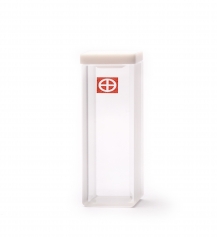
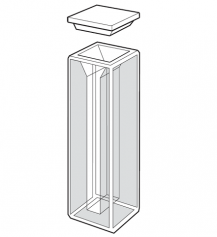
Spacers for 2mm Short-Path Cells. This allows for a 2 mm short pathlength cell to be used in the standard 10 mm cuvette holder with the UV-Vis.
IN STOCKSpacers for 2mm Short-Path Cells. This allows for a 2 mm short pathlength cell to be used in the standard 10 mm cuvette holder with the UV-Vis.
-
Description:
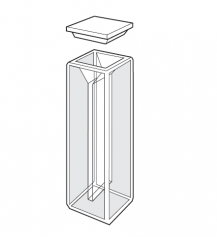
Spacers for 5mm Short-Path Cells. This allows for a 5 mm short pathlength cell to be used in the standard 10 mm cuvette holder with the UV-Vis.
OUT OF STOCKSpacers for 5mm Short-Path Cells. This allows for a 5 mm short pathlength cell to be used in the standard 10 mm cuvette holder with the UV-Vis.
-
Description:
Hydride vapor generator, absorption cell. For HVG with AA-7000
IN STOCKHydride vapor generator, absorption cell. For HVG with AA-7000
-
Description:
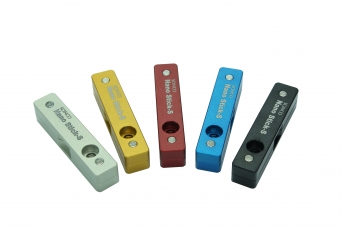
The optimized nano cuvette for concentration and purity measurements of DNA, RNA, oligonucleotides and proteins. Features: Dedicated cell for micro volume of sample Compatible with any kind of UV-Vis. Spectrophotometer No need for any special cell holder. Easy to use and clean Application: Nucleic Acid concentration measurement Nucleic Acid purity measurement Protein concentration measurement (Direct UV method) Bio / Life Science Medical Environmental / Agriculture Food / Beverage Pathlength 0.5 mm Physical Dimensions 12.5 x 12.5 x 60 mm (WDH) Beam Height (Z-Dimension) 15 or 8.5mm types Minimum Sample Volume 2 uL Recommended Sample Volume 2.5 – 3 uL DNA Detection Limit 1.1 ng/uL DNA Maximum Concentration 3000 ng/uL DNA Reproducibility at 100 ng/uL ±1.0 ng/uL DNA Reproducibility at 1000 ng/uL ±3.0 ng/uL Protein Detection Limit 0.06 mg/ml Protein Maximum Concentration 100 mg/ml Protein Reproducibility at 2 mg/ml ±0.02 mg/ml Protein Reproducibility at 10 mg/uL ±0.05 mg/ml
OUT OF STOCKThe optimized nano cuvette for concentration and purity measurements of DNA, RNA, oligonucleotides and proteins. Features: Dedicated cell for micro volume of sample Compatible with any kind of UV-Vis. Spectrophotometer No need for any special cell holder. Easy to use and clean Application: Nucleic Acid concentration measurement Nucleic Acid purity measurement Protein concentration measurement (Direct UV method) Bio / Life Science Medical Environmental / Agriculture Food / Beverage Pathlength 0.5 mm Physical Dimensions 12.5 x 12.5 x 60 mm (WDH) Beam Height (Z-Dimension) 15 or 8.5mm types Minimum Sample Volume 2 uL Recommended Sample Volume 2.5 – 3 uL DNA Detection Limit 1.1 ng/uL DNA Maximum Concentration 3000 ng/uL DNA Reproducibility at 100 ng/uL ±1.0 ng/uL DNA Reproducibility at 1000 ng/uL ±3.0 ng/uL Protein Detection Limit 0.06 mg/ml Protein Maximum Concentration 100 mg/ml Protein Reproducibility at 2 mg/ml ±0.02 mg/ml Protein Reproducibility at 10 mg/uL ±0.05 mg/ml
-
Description:
The optimized nano cuvette for concentration and purity measurements of DNA, RNA, oligonucleotides and proteins. Features: Dedicated cell for micro volume of sample Compatible with any kind of UV-Vis. Spectrophotometer No need for any special cell holder. Easy to use and clean Application: Nucleic Acid concentration measurement Nucleic Acid purity measurement Protein concentration measurement (Direct UV method) Bio / Life Science Medical Environmental / Agriculture Food / Beverage Pathlength 0.5 mm Physical Dimensions 12.5 x 12.5 x 60 mm (WDH) Beam Height (Z-Dimension) 15 or 8.5mm types Minimum Sample Volume 2 uL Recommended Sample Volume 2.5 – 3 uL DNA Detection Limit 1.1 ng/uL DNA Maximum Concentration 3000 ng/uL DNA Reproducibility at 100 ng/uL ±1.0 ng/uL DNA Reproducibility at 1000 ng/uL ±3.0 ng/uL Protein Detection Limit 0.06 mg/ml Protein Maximum Concentration 100 mg/ml Protein Reproducibility at 2 mg/ml ±0.02 mg/ml Protein Reproducibility at 10 mg/uL ±0.05 mg/ml
OUT OF STOCKThe optimized nano cuvette for concentration and purity measurements of DNA, RNA, oligonucleotides and proteins. Features: Dedicated cell for micro volume of sample Compatible with any kind of UV-Vis. Spectrophotometer No need for any special cell holder. Easy to use and clean Application: Nucleic Acid concentration measurement Nucleic Acid purity measurement Protein concentration measurement (Direct UV method) Bio / Life Science Medical Environmental / Agriculture Food / Beverage Pathlength 0.5 mm Physical Dimensions 12.5 x 12.5 x 60 mm (WDH) Beam Height (Z-Dimension) 15 or 8.5mm types Minimum Sample Volume 2 uL Recommended Sample Volume 2.5 – 3 uL DNA Detection Limit 1.1 ng/uL DNA Maximum Concentration 3000 ng/uL DNA Reproducibility at 100 ng/uL ±1.0 ng/uL DNA Reproducibility at 1000 ng/uL ±3.0 ng/uL Protein Detection Limit 0.06 mg/ml Protein Maximum Concentration 100 mg/ml Protein Reproducibility at 2 mg/ml ±0.02 mg/ml Protein Reproducibility at 10 mg/uL ±0.05 mg/ml
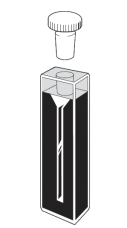
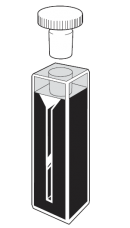
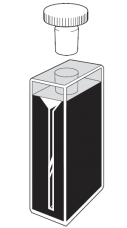
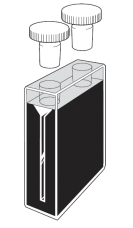
High-Quality UV-Vis Cuvettes in Singapore
A Ultraviolet-Visible (UV-Vis) spectrophotometer is used in spectroscopy analysis to help in determining absorbance or transmittance of discrete wavelengths (UV or visible light radiation) through the sample. A UV-Vis cuvette is also necessary to hold the sample needed by the UV-Vis spectrophotometer during the analysis. Shimadzu is your source for UV-Vis cuvettes for pharmaceutical, life science, and environmental laboratories. Our standard cell range, for example, is engineered to meet the demands of UV spectrophotometric testing.
The choice of cuvette depends on your application. Using an appropriate UV-Vis cuvette is required for your analysis to get an accurate measurement of your sample. There are different types of UV-Vis cuvette cells made mainly from quartz and glass materials. Our cuvettes are available in different path lengths, including standard 10 mm and microvolume options, providing flexibility for sample volumes and concentration ranges. Whether you\'re working with small sample volumes or need high-throughput capabilities, we have the perfect UV cuvette to suit your needs. Micro and semi-micro cuvettes are also available for analysis of small sample volumes.
Should you need UV-Vis cuvettes of any kind, you can purchase them all at ShopShimadzu. You can also browse our UV-Vis consumables to see our full range of cuvettes and accessories.
ShopShimadzu UV-Vis Cuvettes: Precision in Spectrophotometry
Spectroscopy plays an important role in many areas of science, which includes quality control in the beverage industry and many more. It is a key process that enables businesses to learn more about the sample composition and concentration of their products or samples.
Getting a reliable and good-quality UV-Vis cuvette ensures that you can carry out your spectrophotometric analysis without worrying about the sample being contaminated during the process. We are your one-stop shop for you to get all your UV-Vis cuvettes and accessories anytime, anywhere.
ShopShimadzu is a supplier based in Singapore that offers a comprehensive range of UV-Vis cuvettes to help you with different types of analysis. Our cuvettes are manufactured using premium-grade materials, ensuring excellent chemical resistance and optical transparency. This guarantees minimal interference and precise transmission of light, enabling you to obtain reliable and reproducible results.
Our UV-Vis cuvettes come with advanced optical properties, making them ideal for a wide range of applications. They offer exceptional light transmission across the UV and visible spectra, allowing for precise measurements of absorbance and transmittance. The cuvettes exhibit low stray light levels, ensuring accurate readings even at the lowest concentrations. This outstanding performance is crucial for demanding analytical techniques, such as DNA/RNA quantification, protein analysis, enzyme kinetics, and more.
We have designed our cuvettes to fit seamlessly into the most popular spectrophotometer models, ensuring hassle-free integration into your laboratory workflow. Additionally, they are compatible with a wide range of sample solutions, including aqueous and organic solvents, acids, bases, and more. With this versatility, you can conduct experiments across diverse research areas with ease.
Browse through our catalogue of UV-Vis cuvettes, including standard cells (quartz cuvette and glass cuvette), fluorescence cells, flow cells, cylindrical cells, and more by purchasing them online on our website. Register with us today and get all the laboratory consumables you need, including HPLC columns, GC columns, and sample vials.
Quartz Cuvettes for UV Spectrophotometers
Within Shimadzu\'s range, Spectrosil® Quartz covers UV and visible measurements from 190 nm to 2500 nm, while Special Optical Glass is intended for wavelengths from 320 nm upward.
Glass cuvettes absorb UV radiation, making them suitable only for visible-light measurements from 320 nm upward.
Shimadzu stocks these window materials:
|
Material |
Path Lengths |
Wavelength Range |
Usable From |
|
Spectrosil® Quartz |
0.5 to 100 mm |
200 to 2500 nm |
190 nm |
|
Special Optical Glass |
Up to 100 mm |
320 to 2500 nm |
320 nm |
Within Shimadzu’s quartz and glass cell range, use a quartz cuvette for measurements below 320 nm. Quartz transmits from 190 nm, with transmission above 80% guaranteed from 200 nm to 2500 nm.
Matched pairs are stocked alongside single cells for differential absorbance work where consistent transmission between two cells is critical. Standard UV cuvettes have two polished windows, while fluorescence cells are polished on all four sides to suit the perpendicular detector position.
For the complete cell specifications, refer to the Shimadzu Cuvette Selection Guide.
UV-Vis Cuvette Applications
Shimadzu UV-Vis cuvettes support measurement across pharmaceutical testing, life sciences, and environmental monitoring.
Pharmaceutical QC
Shimadzu supplies UV-Vis cuvettes to pharmaceutical laboratories in Singapore. Our standard cell range is available as single cells and matched pairs, and is suitable for pharmacopoeial UV testing methods. For limited volumes, semi-micro and micro cells in the same quartz range are recommended.
Protein Quantification at 280 nm
Protein absorbance at 280 nm is within the UV range, making a quartz cuvette essential. Micro and ultra-micro cells can minimise sample consumption for scarce or high-value samples.
Fluorescence Spectroscopy
Fluorescence cuvettes are polished on all four sides to capture emission perpendicular to the excitation source. Shimadzu stocks standard fluorescence cells in quartz and glass while our micro fluorescence cells are available in quartz.
Environmental Water Quality
UV-Vis covers nitrate, dissolved organics, and water colour measurement. Long-path quartz cuvettes up to 100 mm improve sensitivity for trace-level environmental samples.
High-Throughput Screening
Semi-micro and micro cuvette formats reduce per-measurement volume substantially for faster screening cycles. Shimadzu\'s EcoCells provide a cost-effective quartz and glass option for high-volume UV measurement workflows.
Caring for Your UV-Vis Cuvettes
These practices can protect the condition of UV-Vis cuvettes and measurement accuracy:
- Clean with Compatible Solvents: Rinse with distilled water after each use, then flush with ethanol or acetone for organic residue. Never use abrasive materials on optical faces.
- Avoid Concentrated Alkalis and Hydrofluoric Acid: Both etch quartz and glass surfaces permanently, degrading optical clarity and distorting absorbance readings.
- Dry and Store Carefully: Air-dry inverted or use clean compressed air, and avoid wiping optical faces with paper tissue. Store in a protective case.
- Replace When Readings Become Unreliable: Retire a cuvette when baseline absorbance increases, surfaces show etching or cloudiness, or matched pair readings fall outside tolerance.
Frequently Asked Questions About UV-Vis Cuvettes
What is the difference between UV-Vis glass and quartz cuvettes?
Glass cuvettes are transparent to visible light and are therefore used for measurement in the visible light range (320 to 2500 nm). They are, however, not suitable for measurements below 320 nm, which is within the UV range.
If your analysis uses wavelengths in the UV range, you would need to use a quartz cuvette. Quartz cuvettes are transparent in both UV and visible light ranges (200 to 2500 nm). They can therefore be used for analysis in both UV and visible light ranges.
Are you looking for a quartz or glass cuvette for your spectrophotometry measurements? We supply both glass and quartz cells in various dimensions and light paths, including our standard cells, fluorescence cells, microcells, semi-micro cells, flow cells, and more, for application in UV-Vis and fluorescence spectroscopy.
Can I use a UV-Vis cuvette for fluorescence analysis?
No, you should never use a UV-Vis cuvette for fluorescence spectroscopy. Although the material used for UV-Vis cuvettes and fluorescence cuvettes are similar, the number of polished sides for the two cuvettes is different. In fluorescence spectroscopy, the detector is perpendicular to the light source. Therefore, it requires all four windows to be polished, whereas UV-Vis cuvettes only have two polished sides.
Which cuvette should I use for protein measurement at 280 nm?
280 nm falls within the UV range, where glass does not transmit UV light, and a quartz cuvette is essential for this measurement. Shimadzu\'s Spectrosil® Quartz Standard Cell at 10 mm path length is the recommended format for routine protein UV measurements. For scarce or precious samples, semi-micro and micro quartz cells reduce the required volume, and ultra-micro formats are available for measurements needing only a few microlitres of sample.
What pathlength should I use?
The 10 mm (1 cm) path length is the standard for UV-Vis spectrophotometry. For accurate readings, target absorbance values between 0.2 and 0.8. When samples are too dilute, a longer path length cuvette brings readings into the reliable range while shorter path lengths serve highly concentrated or strongly absorbing samples.
Do you supply matched cuvette pairs?
Yes. Shimadzu stocks matched quartz cuvette pairs alongside single cells across the standard cell range. These cells are designed for dual-beam differential absorbance measurements and any application where consistent optical performance between sample and reference cells is critical.