


 0

 0


- Home
- Technique Categories
- UHPLC and HPLC Columns




UHPLC and HPLC Columns
FiltersFilter By
- Reversed Phase columns
- Normal Phase columns
- Preparative columns
- Bio LC columns
- HILIC columns
- Metal Free columns
- Size Exclusion (GFC/GPC) columns
- Ion Chromatography columns
- Ion-Exclusion columns
- Anion Exchange columns
- Cation Exchange columns
- SFC columns
- Chiral columns
- Trap columns
- Microscale columns
- Precolumn/In-line filters
UHPLC and HPLC Columns

Product Listing
-
 Product Part
Description:
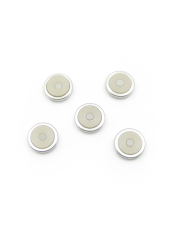
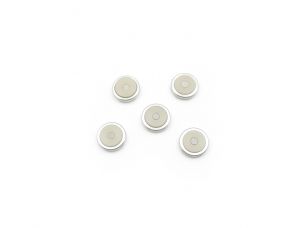
Replacement filter for 226-50001-99 Replacement filters for In-line HPLC/UHPLC Precolumn Filters and Direct Connect HPLC/UHPLC Precolumn Filters.
OUT OF STOCKReplacement filter for 226-50001-99 Replacement filters for In-line HPLC/UHPLC Precolumn Filters and Direct Connect HPLC/UHPLC Precolumn Filters.
-
 Product Part
Description:
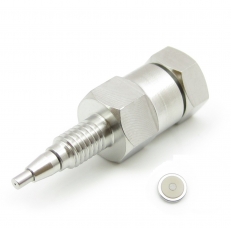
Replacement filters for In-line HPLC/UHPLC Precolumn Filters and Direct Connect HPLC/UHPLC Precolumn Filters. Replacement filter for 226-50001-79.
OUT OF STOCKReplacement filters for In-line HPLC/UHPLC Precolumn Filters and Direct Connect HPLC/UHPLC Precolumn Filters. Replacement filter for 226-50001-79.
-
 Product Part
Description:
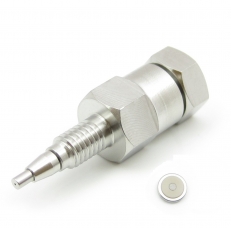
Frit Porosity: 0.2 micron Pressure Rating: 18,000 PSI (0.062" dia. and 0.125" dia.), 10,000 PSI (0.188" dia.) Dead Volume: 1.8 µL (0.062" dia.), 3.5 µL (0.125" dia.), 7.3 µL (0.188" dia.) Frit Material: 316 Stainless Steel Port: 10-32 Port (1/16" CPI) Male Threads: 10-32 Threads In high throughput and routine HPLC separations where mobile phase and sample contamination cause a decrease in column performance or premature column failure, this Pre-column filter will maintain the efficiency of high perfrmance columns and ensure a negligible loss of resolution. This filter can be finger tighten, then wrench tighten an additional 1/4 - 1/2 turn.
OUT OF STOCKFrit Porosity: 0.2 micron Pressure Rating: 18,000 PSI (0.062" dia. and 0.125" dia.), 10,000 PSI (0.188" dia.) Dead Volume: 1.8 µL (0.062" dia.), 3.5 µL (0.125" dia.), 7.3 µL (0.188" dia.) Frit Material: 316 Stainless Steel Port: 10-32 Port (1/16" CPI) Male Threads: 10-32 Threads In high throughput and routine HPLC separations where mobile phase and sample contamination cause a decrease in column performance or premature column failure, this Pre-column filter will maintain the efficiency of high perfrmance columns and ensure a negligible loss of resolution. This filter can be finger tighten, then wrench tighten an additional 1/4 - 1/2 turn.
-
 Product Part
Description:
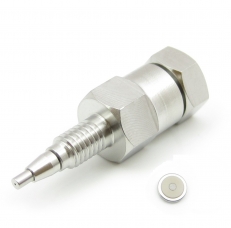
Frit Porosity: 0.2 micron Pressure Rating: 18,000 PSI (0.062" dia. and 0.125" dia.), 10,000 PSI (0.188" dia.) Dead Volume: 1.8 µL (0.062" dia.), 3.5 µL (0.125" dia.), 7.3 µL (0.188" dia.) Frit Material: 316 Stainless Steel Port: 10-32 Port (1/16" CPI) Male Threads: 10-32 Threads In high throughput and routine HPLC separations where mobile phase and sample contamination cause a decrease in column performance or premature column failure, this Pre-column filter will maintain the efficiency of high perfrmance columns and ensure a negligible loss of resolution. This filter can be finger tighten, then wrench tighten an additional 1/4 - 1/2 turn.
OUT OF STOCKFrit Porosity: 0.2 micron Pressure Rating: 18,000 PSI (0.062" dia. and 0.125" dia.), 10,000 PSI (0.188" dia.) Dead Volume: 1.8 µL (0.062" dia.), 3.5 µL (0.125" dia.), 7.3 µL (0.188" dia.) Frit Material: 316 Stainless Steel Port: 10-32 Port (1/16" CPI) Male Threads: 10-32 Threads In high throughput and routine HPLC separations where mobile phase and sample contamination cause a decrease in column performance or premature column failure, this Pre-column filter will maintain the efficiency of high perfrmance columns and ensure a negligible loss of resolution. This filter can be finger tighten, then wrench tighten an additional 1/4 - 1/2 turn.
-
 Product Part
Description:
Frit Porosity: 2 micron Pressure Rating: 18,000 PSI (0.062" dia. and 0.125" dia.), 10,000 PSI (0.188" dia.) Dead Volume: 2.1 µL (0.062" dia.), 5.2 µL (0.125" dia.), 11.3 µL (0.188" dia.) Frit Material: 316 Stainless Steel Port: 10-32 Port (1/16" CPI) Male Threads: 10-32 Threads
OUT OF STOCKFrit Porosity: 2 micron Pressure Rating: 18,000 PSI (0.062" dia. and 0.125" dia.), 10,000 PSI (0.188" dia.) Dead Volume: 2.1 µL (0.062" dia.), 5.2 µL (0.125" dia.), 11.3 µL (0.188" dia.) Frit Material: 316 Stainless Steel Port: 10-32 Port (1/16" CPI) Male Threads: 10-32 Threads
-
 Product Part
Description:
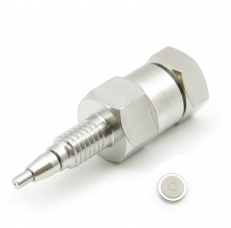
Frit Porosity: 2 micron Pressure Rating: 18,000 PSI (0.062" dia. and 0.125" dia.), 10,000 PSI (0.188" dia.) Dead Volume: 2.1 µL (0.062" dia.), 5.2 µL (0.125" dia.), 11.3 µL (0.188" dia.) Frit Material: 316 Stainless Steel Port: 10-32 Port (1/16" CPI) Male Threads: 10-32 Threads
OUT OF STOCKFrit Porosity: 2 micron Pressure Rating: 18,000 PSI (0.062" dia. and 0.125" dia.), 10,000 PSI (0.188" dia.) Dead Volume: 2.1 µL (0.062" dia.), 5.2 µL (0.125" dia.), 11.3 µL (0.188" dia.) Frit Material: 316 Stainless Steel Port: 10-32 Port (1/16" CPI) Male Threads: 10-32 Threads
-
 Product Part
Description:
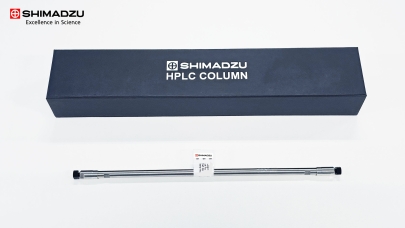
Coated Polysaccharide Chiral Stationary Phase ShimOMNIA Chiral Cellulose-1 is packed with silica particles coated with Cellulose tris-(3,5-dimethylphenylcarbamate) for effective separation of enantiomers.
OUT OF STOCKCoated Polysaccharide Chiral Stationary Phase ShimOMNIA Chiral Cellulose-1 is packed with silica particles coated with Cellulose tris-(3,5-dimethylphenylcarbamate) for effective separation of enantiomers.
-
-
-
Providing Top-Quality HPLC Columns in Singapore
In High-Performance Liquid Chromatography (HPLC), columns play a key role in separating sample components based on differences in their affinity or retention strength for the stationary and mobile phases. With current advancements in LC, technology has evolved to offer smaller particle size HPLC columns with higher sensitivity and resolution for use in HPLC and ultra-high-performance liquid chromatography (UHPLC).
There are many different types of HPLC columns available. The most suitable HPLC column is usually determined by the application and sample. Column types include C18, C8, Phenyl, PFPP, NH2, CN, Silica, and more. These are also available in analytical and preparative (prep) column dimensions.
With all of these in mind, you’ll need a supplier that can provide a dedicated column for different applications.
Shimadzu offers a wide range of products, from analytical instruments to medical systems, aiding in the research and development of various industries worldwide. We strive to make HPLC columns, GC columns, sample vials, and other laboratory consumables more accessible to industries across Singapore and the APAC region, including pharmaceutical companies and companies focused on environmental and chemical safety.
If you’re looking for a reliable supplier for HPLC columns, contact us or visit Shimadzu for an instant quote. Whether you need columns for normal phase, reversed phase, ion exchange, size exclusion, HILIC, or ion chromatography columns, you can definitely find what you need with us. Buy HPLC columns online today at ShopShimadzu.
Types of HPLC Columns
Column choice depends on how your analyte interacts with the stationary phase. Here’s how each type separates compounds and where it is typically used.
Reversed Phase
Reversed phase columns have a non-polar stationary phase and a polar mobile phase, so retention increases with analyte hydrophobicity. They are the most widely used HPLC columns for pharmaceutical, environmental, food and forensic applications. C18 (ODS) and C8 are common phases, with C18 providing stronger retention.
Normal Phase
Normal phase columns have a polar stationary phase and a non-polar mobile phase. They are ideal for compounds that show limited retention in reversed phase, including certain sugars and easily hydrolysable compounds such as acid anhydrides, where a water-free mobile phase helps prevent degradation.
Ion Exchange
Separation is driven by ionic interaction between charged analytes and an oppositely charged stationary phase. Cation exchange columns carry a negative charge and retain positively charged analytes; anion exchange columns carry a positive charge and retain negatively charged analytes. Elution is achieved by changing the mobile phase pH or counter-ion concentration. Common applications include amino acids, peptides, proteins and nucleic acids.
Size Exclusion
Molecules separate by size rather than chemistry. Larger molecules are excluded from the pores of the packing and elute first; smaller molecules diffuse into the pores and elute later. Size-exclusion GPC columns include Gel Permeation Chromatography (GPC), which uses hydrophobic packing and an organic mobile phase to separate polymer molecular weight distributions. It also includes Gel Filtration Chromatography (GFC), which uses hydrophilic packing and an aqueous mobile phase for proteins and other aqueous macromolecules.
HILIC
HILIC columns use a polar stationary phase and a water-miscible, high-organic mobile phase. An aqueous layer forms around the stationary phase, retaining polar analytes through partitioning, hydrogen bonding and electrostatic interactions. They are commonly used for polar compounds such as sugar alcohols and derivatised oligosaccharides.
Chiral
Retention depends on the three-dimensional fit between an analyte's enantiomer and a chiral selector bonded to the stationary phase, so the two mirror-image forms of a compound separate even though they share identical physical and chemical properties otherwise. Chiral columns are used wherever enantiomeric purity matters, most notably pharmaceutical development and quality control.
The Shimadzu HPLC Column Range in Singapore
Shimadzu offers HPLC and UHPLC columns in a wide range of chemistries, dimensions and formats for different analytical needs.
- More than 100 stationary phase chemistries: Options include reversed phase, normal phase, ion exchange, size exclusion, HILIC and chiral phases.
- Wide range of dimensions: Internal diameters range from 1 mm to 50 mm, with lengths from 2 mm to 600 mm for microbore, analytical and preparative applications.
- Particle sizes from 1.6 µm to 50 µm: Includes sub-2 micron options for UHPLC applications.
- HILIC columns: Available for polar compounds that are difficult to retain with reversed-phase chromatography.
- Anion and cation exchange columns: Available for separating charged analytes through ionic interactions.
- Guard columns and holders: Matching options, including guard column and holder sets, are available for compatible columns.
- Online ordering: Search and order columns through ShopShimadzu using product specifications and filters.
- More than 45 USP “L” designations: Helps laboratories identify suitable columns for USP monographs.
UHPLC vs HPLC: What is the Difference?
HPLC and UHPLC use the same separation principle, but UHPLC uses smaller particles and higher system pressures to achieve faster, more efficient separations.
- Particle size: Conventional HPLC typically uses 3 to 5 µm particles, while UHPLC can use sub-2 µm particles for higher efficiency and resolution.
- System pressure: Smaller particles generate more backpressure, so UHPLC systems are designed to operate at much higher pressures than conventional HPLC systems.
- Speed and solvent consumption: The higher efficiency of smaller particles allows UHPLC methods to use shorter columns and higher flow rates while maintaining resolution, reducing analysis time and solvent use.
- When to migrate a method: Moving an HPLC method to UHPLC can be useful when you need higher throughput, better resolution or lower solvent consumption. Migration may not be necessary if the existing HPLC method already meets these requirements.
- Instrument compatibility: Always check that the column's pressure rating matches the LC system. Using a UHPLC column on a conventional HPLC system can exceed its pressure limit, while unsuitable tubing and fittings can add extra-column volume and reduce the resolution benefits of smaller particles.
| Factor | HPLC | UHPLC |
| Particle Size | Typically 3 to 5 µm | Sub-2 µm |
| System Pressure | Up to around 400 bar (6,000 psi) | Up to around 1,000 to 1,300 bar (15,000 to 19,000 psi), system-dependent |
| Analysis Speed | Standard run times | Shorter run times at equivalent or better resolution |
| Solvent Consumption | Higher per run | Lower per run |
| Typical Use | Routine methods within existing resolution and throughput needs | High-throughput labs, complex separations, methods needing extra resolution |
Our LC Method Transfer Tool calculates equivalent column dimensions, flow rate and injection volume when transferring methods between HPLC and UHPLC, providing a faster starting point without redeveloping the method from scratch.
What are HPLC Guard Columns Used for and How Do You Choose One?
HPLC guard columns protect the main column from contaminants, support consistent performance and reduce maintenance costs.
- What it protects against: HPLC guard columns are installed in front of the main analytical or prep HPLC column to prolong its lifetime. They remove highly absorptive compounds and particulate contaminants before the sample reaches the main column, preventing those contaminants from causing irreversible damage.
- When to fit one: A guard column is useful for any routine method. It is especially important for complex or unfiltered matrices, such as biological samples, environmental extracts, or samples without an upstream clean-up step.
- When to replace it: Replace the guard column when backpressure rises or peak shape and resolution drop. There is no fixed injection count because fouling depends on the sample. Replacing the guard column is much cheaper than replacing the main column.
- How to match it to your main column: Use the same packing material as the main column. Match the internal diameter (ID), or choose the nearest smaller size if an exact match is unavailable. Keep the length as short as possible without allowing target compounds to reach the main column. A pre-matched guard column and holder set avoids pairing the packing material and ID separately.
How to Choose an HPLC Column
Choosing the right HPLC column depends on five key factors that influence separation, efficiency and method performance.
- Chemistry: The stationary phase, such as C18, C8, phenyl, HILIC or ion exchange, determines how analytes interact with the column. Choose the chemistry based primarily on the analyte's polarity and charge.
- Particle size: Smaller particles can provide higher resolution and efficiency but generate greater backpressure. Larger particles suit routine methods on conventional HPLC systems.
- Pore size: Pore size should match the size of the molecules being analysed. Smaller pores around 80 to 120 Å are generally suitable for small molecules, while larger pores of 200 Å or more provide better access for peptides, proteins and other large molecules.
- Internal diameter: Wider columns can handle larger sample loads and are less affected by extra-column volume. Narrower columns use less solvent and can improve sensitivity, making them suitable for UHPLC and LC-MS applications.
- Length: Longer columns can improve resolution but generally increase run time and backpressure. Shorter columns provide faster analysis with some potential loss in resolution.
For method development with an unknown sample, a 100–150 mm × 4.6 mm C18 column with 3–5 µm particles and a 100–120 Å pore size is a starting point. Then refine the column selection based on the separation requirements.
If replacing another manufacturer's column, use the LC columns cross-reference table to find the closest Shimadzu equivalent by dimensions and phase chemistry. For methods based on a USP monograph, the USP “L” column listing helps match the required USP “L” designation to a corresponding Shimadzu column.
Frequently Asked Questions About HPLC Columns
1. What are the common types of HPLC Columns used?
Common HPLC column types include normal phase columns, reversed phase, HILIC, ion exchange and size exclusion columns. Each uses a different separation mechanism and suits specific analytes and applications, such as pharmaceuticals, proteins, polymers, sugars and charged compounds.
2. What is a preparative HPLC column?
Preparative (prep) HPLC columns are essential tools in compound purification, isolating and collecting pure compounds for subsequent use. These columns are designed to handle larger sample loads, requiring a wider internal diameter, typically 10mm to 50mm. By accommodating larger sample quantities, prep columns enable efficient compound purification.
Prep columns play a crucial role in various applications, such as pharmaceutical research and development, natural product isolation, and chemical synthesis. They separate and purify complex mixtures, enabling scientists to obtain highly pure compounds for further analysis, characterisation, and utilisation.
3. How does a prep column differ from an analytical column?
Preparative (prep) columns and analytical columns differ in several key aspects, including their primary function, internal diameter, and sample loading capacity. While prep columns primarily purify compounds, analytical columns are used for qualitative and quantitative analysis and are designed to handle smaller sample volumes. Therefore, they possess a narrower internal diameter, typically between 2mm and 4.6mm.
4. Do you stock HILIC and ion exchange columns in Singapore?
Yes. Our HPLC range includes HILIC phases alongside anion and cation exchange columns, available to order online with the rest of our HPLC and UHPLC catalogue.
5. Are demo or trial columns available?
Demo columns are available to trial before you commit to a purchase. Request a demo column and our team will confirm availability for your application.
6. Is there a cross-reference tool for column equivalents?
Yes, our LC columns cross-reference table matches columns from other manufacturers to their closest Shimadzu equivalent by dimension and phase chemistry.
7. How long does an HPLC column last?
Column lifespan depends on sample matrix, mobile phase and how well the column is maintained. A guard column and proper storage between runs extend lifespan considerably; replace the column when backpressure or resolution no longer meet your method's requirements.
Read More