


 0

 0


Reversed Phase columns
Shimadzu's C18 columns are the workhorse of reversed-phase HPLC, used across pharmaceutical, environmental and food analysis to separate compounds by hydrophobicity. The range covers standard silica, high-purity inert and metal-free chemistries, in both HPLC and UHPLC particle sizes.
-
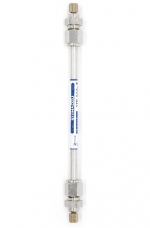
Description:
The effects of metal oxides are suppressed to a minimum due to the use of highly-purified silica gel as a base material in the STR series. STR series columns are durable due to the use of mechanically strong silica gel. STR series columns are highly resistant to acidic and basic mobile phases. STR series columns are easy to operate and display high levels of performance due to low analytical operating pressures. Excellent end capping technology provides sharp peak shapes for basic and acidic compounds, and for samples which form complexes with metals.
OUT OF STOCKThe effects of metal oxides are suppressed to a minimum due to the use of highly-purified silica gel as a base material in the STR series. STR series columns are durable due to the use of mechanically strong silica gel. STR series columns are highly resistant to acidic and basic mobile phases. STR series columns are easy to operate and display high levels of performance due to low analytical operating pressures. Excellent end capping technology provides sharp peak shapes for basic and acidic compounds, and for samples which form complexes with metals.
-
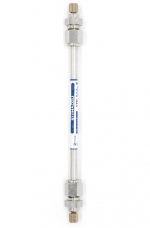
Description:
The effects of metal oxides are suppressed to a minimum due to the use of highly-purified silica gel as a base material in the STR series. STR series columns are durable due to the use of mechanically strong silica gel. STR series columns are highly resistant to acidic and basic mobile phases. STR series columns are easy to operate and display high levels of performance due to low analytical operating pressures. Excellent end capping technology provides sharp peak shapes for basic and acidic compounds, and for samples which form complexes with metals.
OUT OF STOCKThe effects of metal oxides are suppressed to a minimum due to the use of highly-purified silica gel as a base material in the STR series. STR series columns are durable due to the use of mechanically strong silica gel. STR series columns are highly resistant to acidic and basic mobile phases. STR series columns are easy to operate and display high levels of performance due to low analytical operating pressures. Excellent end capping technology provides sharp peak shapes for basic and acidic compounds, and for samples which form complexes with metals.
-
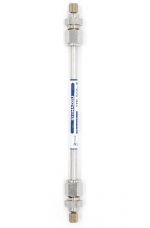
Description:
The effects of metal oxides are suppressed to a minimum due to the use of highly-purified silica gel as a base material in the STR series. STR series columns are durable due to the use of mechanically strong silica gel. STR series columns are highly resistant to acidic and basic mobile phases. STR series columns are easy to operate and display high levels of performance due to low analytical operating pressures. Excellent end capping technology provides sharp peak shapes for basic and acidic compounds, and for samples which form complexes with metals.
OUT OF STOCKThe effects of metal oxides are suppressed to a minimum due to the use of highly-purified silica gel as a base material in the STR series. STR series columns are durable due to the use of mechanically strong silica gel. STR series columns are highly resistant to acidic and basic mobile phases. STR series columns are easy to operate and display high levels of performance due to low analytical operating pressures. Excellent end capping technology provides sharp peak shapes for basic and acidic compounds, and for samples which form complexes with metals.
-
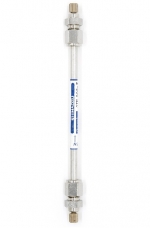
Description:
The effects of metal oxides are suppressed to a minimum due to the use of highly-purified silica gel as a base material in the STR series. STR series columns are durable due to the use of mechanically strong silica gel. STR series columns are highly resistant to acidic and basic mobile phases. STR series columns are easy to operate and display high levels of performance due to low analytical operating pressures. Excellent end capping technology provides sharp peak shapes for basic and acidic compounds, and for samples which form complexes with metals.
OUT OF STOCKThe effects of metal oxides are suppressed to a minimum due to the use of highly-purified silica gel as a base material in the STR series. STR series columns are durable due to the use of mechanically strong silica gel. STR series columns are highly resistant to acidic and basic mobile phases. STR series columns are easy to operate and display high levels of performance due to low analytical operating pressures. Excellent end capping technology provides sharp peak shapes for basic and acidic compounds, and for samples which form complexes with metals.
-
Description:
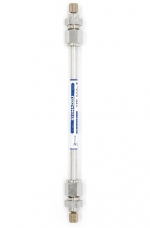
The effects of metal oxides are suppressed to a minimum due to the use of highly-purified silica gel as a base material in the STR series. STR series columns are durable due to the use of mechanically strong silica gel. STR series columns are highly resistant to acidic and basic mobile phases. STR series columns are easy to operate and display high levels of performance due to low analytical operating pressures. Excellent end capping technology provides sharp peak shapes for basic and acidic compounds, and for samples which form complexes with metals.
OUT OF STOCKThe effects of metal oxides are suppressed to a minimum due to the use of highly-purified silica gel as a base material in the STR series. STR series columns are durable due to the use of mechanically strong silica gel. STR series columns are highly resistant to acidic and basic mobile phases. STR series columns are easy to operate and display high levels of performance due to low analytical operating pressures. Excellent end capping technology provides sharp peak shapes for basic and acidic compounds, and for samples which form complexes with metals.
-
Description:
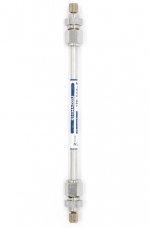
The effects of metal oxides are suppressed to a minimum due to the use of highly-purified silica gel as a base material in the STR series. STR series columns are durable due to the use of mechanically strong silica gel. STR series columns are highly resistant to acidic and basic mobile phases. STR series columns are easy to operate and display high levels of performance due to low analytical operating pressures. Excellent end capping technology provides sharp peak shapes for basic and acidic compounds, and for samples which form complexes with metals.
OUT OF STOCKThe effects of metal oxides are suppressed to a minimum due to the use of highly-purified silica gel as a base material in the STR series. STR series columns are durable due to the use of mechanically strong silica gel. STR series columns are highly resistant to acidic and basic mobile phases. STR series columns are easy to operate and display high levels of performance due to low analytical operating pressures. Excellent end capping technology provides sharp peak shapes for basic and acidic compounds, and for samples which form complexes with metals.
-
Description:
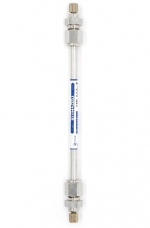
The effects of metal oxides are suppressed to a minimum due to the use of highly-purified silica gel as a base material in the STR series. STR series columns are durable due to the use of mechanically strong silica gel. STR series columns are highly resistant to acidic and basic mobile phases. STR series columns are easy to operate and display high levels of performance due to low analytical operating pressures. Excellent end capping technology provides sharp peak shapes for basic and acidic compounds, and for samples which form complexes with metals.
OUT OF STOCKThe effects of metal oxides are suppressed to a minimum due to the use of highly-purified silica gel as a base material in the STR series. STR series columns are durable due to the use of mechanically strong silica gel. STR series columns are highly resistant to acidic and basic mobile phases. STR series columns are easy to operate and display high levels of performance due to low analytical operating pressures. Excellent end capping technology provides sharp peak shapes for basic and acidic compounds, and for samples which form complexes with metals.
-
Description:
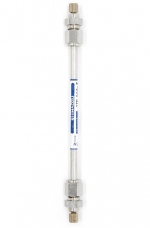
The effects of metal oxides are suppressed to a minimum due to the use of highly-purified silica gel as a base material in the STR series. STR series columns are durable due to the use of mechanically strong silica gel. STR series columns are highly resistant to acidic and basic mobile phases. STR series columns are easy to operate and display high levels of performance due to low analytical operating pressures. Excellent end capping technology provides sharp peak shapes for basic and acidic compounds, and for samples which form complexes with metals.
OUT OF STOCKThe effects of metal oxides are suppressed to a minimum due to the use of highly-purified silica gel as a base material in the STR series. STR series columns are durable due to the use of mechanically strong silica gel. STR series columns are highly resistant to acidic and basic mobile phases. STR series columns are easy to operate and display high levels of performance due to low analytical operating pressures. Excellent end capping technology provides sharp peak shapes for basic and acidic compounds, and for samples which form complexes with metals.
-
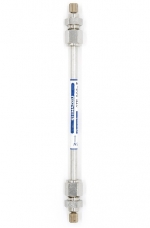
Description:
The effects of metal oxides are suppressed to a minimum due to the use of highly-purified silica gel as a base material in the STR series. STR series columns are durable due to the use of mechanically strong silica gel. STR series columns are highly resistant to acidic and basic mobile phases. STR series columns are easy to operate and display high levels of performance due to low analytical operating pressures. Excellent end capping technology provides sharp peak shapes for basic and acidic compounds, and for samples which form complexes with metals.
OUT OF STOCKThe effects of metal oxides are suppressed to a minimum due to the use of highly-purified silica gel as a base material in the STR series. STR series columns are durable due to the use of mechanically strong silica gel. STR series columns are highly resistant to acidic and basic mobile phases. STR series columns are easy to operate and display high levels of performance due to low analytical operating pressures. Excellent end capping technology provides sharp peak shapes for basic and acidic compounds, and for samples which form complexes with metals.
-
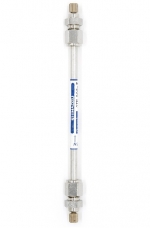
Description:
The effects of metal oxides are suppressed to a minimum due to the use of highly-purified silica gel as a base material in the STR series. STR series columns are durable due to the use of mechanically strong silica gel. STR series columns are highly resistant to acidic and basic mobile phases. STR series columns are easy to operate and display high levels of performance due to low analytical operating pressures. Excellent end capping technology provides sharp peak shapes for basic and acidic compounds, and for samples which form complexes with metals.
OUT OF STOCKThe effects of metal oxides are suppressed to a minimum due to the use of highly-purified silica gel as a base material in the STR series. STR series columns are durable due to the use of mechanically strong silica gel. STR series columns are highly resistant to acidic and basic mobile phases. STR series columns are easy to operate and display high levels of performance due to low analytical operating pressures. Excellent end capping technology provides sharp peak shapes for basic and acidic compounds, and for samples which form complexes with metals.
-
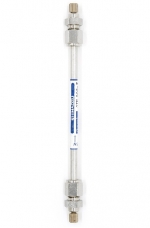
Description:
The effects of metal oxides are suppressed to a minimum due to the use of highly-purified silica gel as a base material in the STR series. STR series columns are durable due to the use of mechanically strong silica gel. STR series columns are highly resistant to acidic and basic mobile phases. STR series columns are easy to operate and display high levels of performance due to low analytical operating pressures. Excellent end capping technology provides sharp peak shapes for basic and acidic compounds, and for samples which form complexes with metals.
OUT OF STOCKThe effects of metal oxides are suppressed to a minimum due to the use of highly-purified silica gel as a base material in the STR series. STR series columns are durable due to the use of mechanically strong silica gel. STR series columns are highly resistant to acidic and basic mobile phases. STR series columns are easy to operate and display high levels of performance due to low analytical operating pressures. Excellent end capping technology provides sharp peak shapes for basic and acidic compounds, and for samples which form complexes with metals.
What Is a C18 Column?
A C18 column is the most widely used type of reversed-phase HPLC column, packed with a non-polar 18-carbon (octadecyl) stationary phase that separates compounds by their hydrophobicity. Also called a reverse phase column in some literature, it's the workhorse of liquid chromatography across pharmaceutical, environmental and food analysis, and where "reversed-phase HPLC column" appears without qualifier, a C18 is usually what's meant.
These columns, with applications in pharmaceuticals, environmental science, and chemical analysis, are available in various sizes and particle types for precise customisation. To meet the stringent demands of modern analytical techniques, Shimadzu offers a comprehensive range of advanced C18 columns engineered for exceptional performance and reliability.
Understanding the Types of C18 Reversed Phase HPLC Columns
Shimadzu's C18 range covers the main method types without duplication. For routine, general-purpose HPLC, the Shim-pack G series (GIS, GIST and GISS, named individually below) is the broad first pick. The Shim-pack Velox C18 uses core-shell particle technology for fast, high-efficiency separations. The Shim-pack Scepter C18 adds chemical durability and extended pH range for demanding methods. The Shim-pack Arata C18 is engineered for peak-shape precision on basic compounds, the Shim-pack Solar C18 is the economical routine option, and the Shim-pack NovaCore C18 combines hybrid silica with core-shell technology for specialised high-efficiency work across a broad pH window.
For UHPLC applications, selected Shim-pack column series are available in smaller particle sizes to support high-efficiency separations under higher-pressure operating conditions. The Shim-pack Velox C18 (core-shell particles) and Shim-pack NovaCore C18 (hybrid silica with core-shell) sit at the fast end of the range and transfer cleanly from HPLC methods when the instrument's pressure tolerance allows. For non-C18 chemistries at UHPLC pressures, see Shimadzu's full HPLC and UHPLC columns catalogue.
While all C18 columns are used for reversed-phase chromatography, they are not all the same. They can differ in silica particle type, particle pore size, particle surface area, carbon loading, end-capping, and bonding technology. These factors result in unique separation profiles and applications for the same mixture of compounds. Here are some of the major types of C18 columns:
Arata C18
Engineered for unprecedented resolution and superior peak shape, this column is ideal for both basic and acidic compounds. It also offers rapid equilibration, which is beneficial for LC/MS analysis.
At a glance:
- Best For: Basic and acidic compound separations, and LC/MS work benefiting from rapid equilibration.
- Particle Size: xxx
- Key Feature: High resolution and superior peak shape across mixed-polarity analytes.
- UHPLC and Inertness: xxx
GIST C18
Known for its superior inertness and wide pH range, the GIST C18 column enhances analysis precision and column stability. It is well-suited for samples that are difficult to analyse, providing symmetrical peaks.
At a glance:
- Best For: Difficult samples requiring wide pH range operation and symmetrical peaks.
- Particle Size: xxx
- Key Feature: Superior inertness across a wide pH range for improved column stability.
- UHPLC and Inertness: Inert. UHPLC compatibility xxx.
GISS C18
This ultra-high inertness column is designed for rapid separations with symmetrical peaks, making it a great choice for LC/MS/MS analysis. It is optimised with a large surface area and pore size for superior performance.
At a glance:
- Best For: LC/MS/MS analysis and rapid separations needing symmetrical peaks on chelating analytes.
- Particle Size: xxx
- Key Feature: Ultra-high inertness with large surface area and pore size.
- UHPLC and Inertness: Ultra-high inertness. UHPLC compatibility xxx.
GIS C18
This column features strong hydrophobic interaction and low adsorption of ionic compounds. Its highly uniform particles ensure stable mobile phase delivery and low pressure, making it ideal for preparative separations.
At a glance:
- Best For: Preparative separations and applications with strong hydrophobic interactions.
- Particle Size: xxx
- Key Feature: Low adsorption of ionic compounds with stable mobile phase delivery and low back pressure.
- UHPLC and Inertness: xxx
Velox C18
Designed as a general-purpose reversed-phase column, the Velox C18 offers the highest hydrophobic retention among the Velox phases. It is suitable for a wide range of applications in various industries.
At a glance:
- Best For: General-purpose reversed-phase HPLC across pharmaceutical, environmental and food work.
- Particle Size: xxx
- Key Feature: Highest hydrophobic retention among the Velox phases.
- UHPLC and Inertness: xxx
Solar C18
Packed with high-purity, fully end-capped silica gel, the Solar C18 column provides good hydrophobic retention and excellent peak shapes. It has a wide pH range, making it suitable for versatile method development.
At a glance:
- Best For: Versatile method development requiring wide pH range operation.
- Particle Size: xxx
- Key Feature: High-purity, fully end-capped silica gel for good hydrophobic retention and excellent peak shape.
- UHPLC and Inertness: Fully end-capped (reduces silanol activity). UHPLC compatibility xxx.
Besides these, Shimadzu offers an even wider array of specialised C18 columns to meet every need, including the ShimNex WP C18, ShimNex UP C18, and NovaCore C18.
Which C18 Columns Are Recommended for Reversed-Phase HPLC?
For standard reversed-phase HPLC on Shimadzu columns, the Shim-pack G series (GIS, GIST, GISS) is the general-purpose first pick for routine methods. For basic compounds and other peak-shape-critical work, choose the Shim-pack Arata C18. For methods needing chemical durability or extended pH range, choose the Shim-pack Scepter C18. All three sit in the standard-HPLC range. For UHPLC particle sizes, see the section below.
Which C18 Columns Are Best for UHPLC Applications?
For UHPLC work on Shimadzu columns, choose ShimNex Velox C18 (core-shell particles) and Shim-pack NovaCore C18 (hybrid silica with core-shell) both run at the high efficiency UHPLC demands. Pick based on whether straightforward core-shell speed (Velox) or broader pH compatibility (NovaCore) is the better fit for your method. Match column dimensions and particle size to your instrument's pressure tolerance.
C8 vs C18 Columns – Which Should You Use?
The five-row comparison below sets out how the two chemistries differ in practice. A follow-up paragraph covers when to move a method from one to the other.
|
Property |
C8 Column |
C18 Column |
|
Alkyl chain length |
8 carbons |
18 carbons |
|
Hydrophobicity |
Lower |
Higher |
|
Relative retention |
Weaker, shorter retention times |
Stronger, longer retention times |
|
Typical run time |
Shorter |
Longer |
|
Best-suited analytes |
Highly hydrophobic samples that over-retain on C18 |
Broad range of non-polar and moderately polar compounds |
If your C18 method is producing peaks that elute too late, run too long, or need excessive organic modifier to bring off the column, moving to a C8 shortens retention without changing the mode of separation. Going the other way, if your C8 method under-retains and analytes coelute early, C18 gives you the retention headroom to pull them apart. Method transfer between the two is straightforward because both run reversed-phase chemistry on silica.
Bonding, Endcapping and Carbon Load
Beyond the base C18 chemistry, three variables account for most of the performance difference between columns in the range: how the silica is treated, how much bonded phase sits on it, and the pH window the column runs stably in. Understanding these turns a long column list into a short shortlist.
Endcapping and Silanol Activity
Endcapping is the secondary bonding step that caps residual silanol groups on the silica surface after the C18 phase is attached. Unendcapped silica leaves those silanols exposed, and they interact with basic analytes (amines, aromatic bases) as an ion-exchange site rather than a reversed-phase site. The result is peak tailing on basic compounds, longer method development and poor batch-to-batch reproducibility. Fully end-capped columns like the Solar C18 eliminate that behaviour.
Carbon Load and Retention Strength
Carbon load is the percentage of bonded phase on the silica by weight, and it drives how strongly the column retains non-polar analytes. Higher carbon loads mean longer retention times, better resolution on structurally similar compounds, and the ability to use higher aqueous mobile phases without early breakthrough. Lower carbon loads run faster and work well when your analytes are already highly hydrophobic and would over-retain on a heavier phase.
pH Stability Range
Standard C18 silica columns run stably between roughly pH 2 and pH 8. Outside that window, the silica dissolves at high pH or the C18 phase hydrolyses off at low pH. Columns built for extended pH ranges use modified silica or hybrid bonding to run reliably down to pH 1 or up to pH 12, at the cost of some carbon load or peak shape. If your method sits outside the standard window (proteins requiring high pH, ion-pair reagents at low pH), the extended-range columns in Shimadzu's C18 range are the safe pick.
You can filter Shimadzu's C18 range on this page by particle size, pore size, pH range and bonding technology to narrow the list once you know which variable your method depends on.
Inert and Metal-Free C18 Columns
An inert C18 column gives you sharper peaks, better recoveries and more reproducible retention times on samples that chelate with metal, without changing anything else about your method. That's the practical value of inertness: the stainless-steel hardware and the silica surface are both treated to keep metal ions out of the interaction, so what you see in the chromatogram reflects your analyte and not the column.
On Shimadzu C18 columns, that treatment ranges from the superior inertness of the GIST C18 to the ultra-high inertness of the GISS C18 built for LC/MS/MS. If your samples are heavier hitters like phosphorylated compounds, organic acids or oligonucleotides, our separate metal-free and bioinert C18 range removes metal contact along the entire flow path, so the recoveries you're chasing on standard hardware become the recoveries you actually get.
Explore the metal-free and bioinert range →
Applications of C18 Columns
Reversed-phase C18 columns cover most routine liquid chromatography work across pharmaceutical, food, environmental and biopharmaceutical laboratories. Which column suits which application depends on the analyte class, the required limit of detection, and whether the method is HPLC or LC-MS. Sample preparation typically pairs the column with matching HPLC vials from Shimadzu's consumables range.
Pharmaceutical Analysis
Assay, related-substance and stability-indicating methods for small-molecule drugs almost universally run on C18. The Arata C18 handles the basic and acidic compounds that dominate active pharmaceutical ingredient libraries, with peak shape robust enough to support USP-compliant method validation.
Food Contaminant Analysis
For pesticide, mycotoxin and veterinary-drug residue analysis in food matrices, inertness and hydrophobic retention matter more than raw plate count. Shimadzu's Velox C18 carries the general-purpose retention needed across a wide range of food-safety methods.
Peptide Separation
Peptide work needs wider pores than small-molecule methods so peptides can access the bonded phase without being size-excluded. Shimadzu's dedicated peptide C18 with 300 Å pores or the ShimNex WP C18 range] combines the wide pores with the pH stability that peptide methods often require at low pH with TFA or formic acid.
Low-Bleed HPLC-MS
Column bleed contaminates the mass spectrometer source and raises baseline in the low-mass region. The GISS C18 is built with ultra-high inertness and minimal bleed to keep the MS clean across long acquisition batches, which is why it is the standard pick for LC-MS/MS on the Shimadzu range. Pair with syringe filters sized for the sample matrix to protect column longevity.
Basic Compound Separation
Amines, alkaloids and other basic analytes tail badly on unmodified silica. The Arata C18 is engineered for symmetrical peak shape on basic compounds, which is where most method development on basic drugs runs into trouble.
C18 Columns for Precision and Accuracy
The three sub-sections below cover the specification choices that most often decide whether a method holds its precision run to run: batch reproducibility and column stability, particle and pore options, and compatibility across analytical methods.
Reproducibility and Stability
Shimadzu's C18 columns are manufactured and tested individually so batch variation stays inside method tolerance and retention times hold across long sample queues. The columns are built to sustain high back pressures and repeated mobile-phase transitions without loss of peak shape or column bleed, which means fewer requalification runs and longer service life per column.
Particle and Pore Options
Available particle sizes span the standard HPLC range through UHPLC-rated sub-2 µm chemistries, with pore sizes chosen to match the analyte size and polarity. Smaller particles give higher plate counts and shorter analysis times at the cost of back pressure. Larger pores accommodate proteins and other large biomolecules that would otherwise be size-excluded. For samples where separation depends on molecular size rather than hydrophobicity, size exclusion columns are the appropriate chemistry rather than C18.
Method Compatibility
The C18 range runs across HPLC, UHPLC and LC-MS platforms without column-side changes to your method, so a column developed on your existing HPLC instrument transfers cleanly when you scale up to UHPLC or hyphenate to a mass spec. Where inertness or metal-free performance is needed for LC-MS work, the GIST C18, GISS C18, and the separate metal-free range extend the same method compatibility into more demanding analyses.
Get C18 Columns in Singapore from Shimadzu
Finding a C18 column that is right for your application is important to ensure good sample separation and peak resolution. At Shimadzu, we provide a wide selection of reversed-phase C18 HPLC columns to cater to your application needs. Shimadzu HPLC columns are manufactured and tested individually to ensure superior quality and inertness, giving you high precision in analysis and increased column durability. In addition, a highly reproducible symmetrical peak shape can be achieved even when analysing strong ionic compounds and difficult to absorb samples. Shimadzu also offers suitable C18 columns for the analysis of highly polar compounds under 100% aqueous mobile phase, with excellent retentivity.
For other C18 columns selection, feel free to contact us. Alternatively, browse our range of HPLC columns and lab consumables at ShopShimadzu, and register for an account to purchase our products online.
Frequently Asked Questions About C18 Columns in Singapore
Can I use 100% aqueous mobile phase on the C18 column?
Not all C18 columns are stable to 100% aqueous mobile phase conditions. Using a 100% aqueous mobile phase on a C18 column that cannot withstand such conditions will result in a phenomenon called phase collapse that damages the column. Some of Shimadzu's C18 columns that are compatible with 100% aqueous conditions are Shim-pack Scepter C18, Shim-pack GIST C18-AQ, Shim-pack GIS RP-Shield and Shim-pack GISS C18.
What are the differences between a C8 and a C18 column?
C18 retains non-polar analytes more strongly and runs longer methods. C8 retains less and runs faster, and it's the pick when your analytes over-retain on C18. See the C8 vs C18 section above for the full alkyl-chain, run-time and analyte-type comparison.
Which C18 column is best for basic compounds?
For basic compounds like amines and alkaloids, the Arata C18 is Shimadzu's first-choice pick. It's engineered for symmetrical peak shape on basic and acidic analytes, which is where most method development on basic drugs runs into trouble.
Do you offer inert or metal-free C18 columns?
Yes, both. The GIST C18 and GISS C18 offer inert C18 chemistry across the standard HPLC range, and a separate metal-free and bioinert C18 range removes metal contact along the entire flow path for phosphorylated compounds, organic acids and oligonucleotides. See the Inert and Metal-Free C18 Columns section above for the full picture.
Is there a Shimadzu equivalent to my Waters or Agilent column?
Yes, often. Shimadzu's LC column cross-reference tool matches most commonly used HPLC and UHPLC columns from other manufacturers to the closest Shimadzu equivalent by chemistry, particle size and application. Search the cross-reference to find your match.