


 0

 0


Vials
Product Listing
-
-
OUT OF STOCK
Vials, Biotech, CLAM-2000 Reagent Screw No. 2-C
-
-
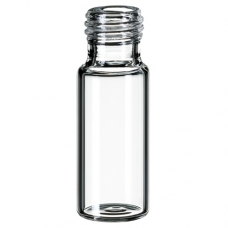
Description:
1.5ml Screw-thread Clear Vial 100pcs
-
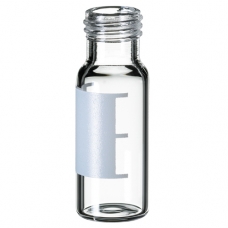
Description:
1.5ml Screw-thread Clear Vial with write on spot 100pcs
IN STOCK1.5ml Screw-thread Clear Vial with write on spot 100pcs
-
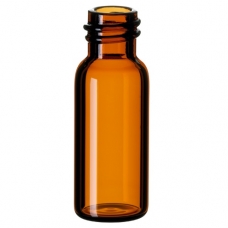
Description:
1.5ml Screw-thread Amber Vial 100pcs Replacement vial for 226-54111-51 vial kit.
LOW STOCK1.5ml Screw-thread Amber Vial 100pcs Replacement vial for 226-54111-51 vial kit.
-
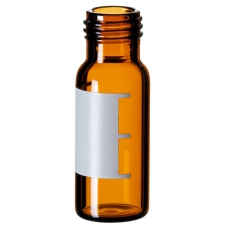
Description:
1.5ml Screw-thread Amber Vial with write on spot 100pcs
IN STOCK1.5ml Screw-thread Amber Vial with write on spot 100pcs
-
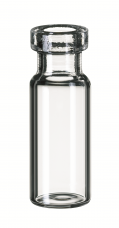
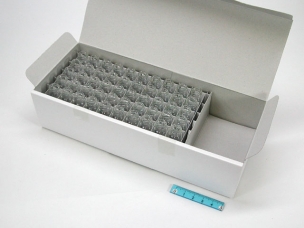

Vials for HPLC & Gas Chromatography (GC)
When performing chromatography, different types of sample vials are required based on sample volume, sample type, compound volatility, compound stability, and sensitivity of analysis. For small-volume sample analysis, low-adsorption HPLC vials in mass spec grade can help reduce the binding of basic compounds on the glass surface. There are also many types of sample vials available catered to different applications, such as clear vials for normal usage or amber vials for protecting the light sensitive analytes and compounds from UV light. Sample vials are suitable for LCMS and GCMS analysis.
Getting the highest quality vials for your high-performance liquid chromatography (HPLC) and gas chromatography (GC) analysis is crucial to ensure comprehensive and precise data on your samples. These vials also need to be compatible not only for the different samples you will be analysing but for your HPLC and GC instruments as well. If you’re looking for sample vials for your HPLC and GC applications, you can find what you need at ShopShimadzu.
We have GC vials that are specifically designed to meet the stringent requirements of gas chromatography analysis. These vials are manufactured from high-quality materials to ensure optimal performance and compatibility with GC systems. Our GC vials provide exceptional inertness, minimal adsorption, and low background levels, enabling accurate and reliable analysis of volatile and semi-volatile compounds.
On the other hand, we also offer HPLC vials that are engineered to meet the demanding requirements of HPLC analysis. These vials are made from high-quality, inert materials to prevent interactions between the sample and the vial, ensuring accurate and reproducible results. With precise manufacturing tolerances and consistent quality, our HPLC vials offer exceptional performance and compatibility with various HPLC instruments. We also offer HPLC columns that you may find useful in your application.
Sample Vials for Various Applications
The material, colour, closure type, and certification level of a vial affect sample integrity, instrument compatibility, and results accuracy. Shimadzu's range covers the full breadth of HPLC and GC applications, from routine laboratory work to pharmaceutical testing.
Clear & Amber Vials
In most applications, transparent clear vials are used for holding samples. They are suitable for a wide range of applications, including general laboratory use, sample storage, and sample preparation for analytical techniques. However, when you are handling samples that are sensitive to light, amber vials should be used to ensure their stability and integrity throughout your experiments. These sample vials are able to absorb a broad range of light waves from the light spectrum, preventing the UV light from degrading the sample and compromising it.
Whether you’re looking for clear vials for inspection or amber vials to protect light-sensitive compounds, we have just what you need. Made from high-quality, transparent glass, our clear vials allow for easy observation of sample characteristics, such as colour, clarity, and particulate matter. We also have amber vials that are specifically designed to protect light-sensitive samples from degradation caused by harmful UV rays. With its amber-coloured glass, they filter out a significant portion of UV and visible light, providing optimal protection for the light-sensitive compounds used for analysis and testing.
Headspace Vials
Headspace sampling is a sampling technique that is used in gas chromatography to analyse volatile compounds in the heavier sample matrix. Headspace vials are used to hold the samples for headspace sampling and injection either manually or using an autosampler. Different manufacturers will have different designs for autosamplers and therefore use different headspace vials designs.
Shimadzu offers a variety of headspace vials that are compatible with autosamplers from different manufacturers. You can find vials that feature a specially designed headspace area, allowing for the analysis of gas-phase samples. We also offer headspace vials with precise design to ensure optimal sealing and minimise the risk of sample contamination. Our headspace vials are widely used in GC analysis and provide reliable results when examining volatile compounds. Find both flat and round bottle styles for various headspace instrument platforms.
Headspace and SPME Sample Preparation
Headspace and SPME (Solid Phase Microextraction) are complementary GC sample preparation techniques for volatile and semi-volatile compound analysis. In static headspace sampling, a sample is sealed in a crimped GC vial and heated, allowing volatile analytes to equilibrate into the gas phase above the matrix for injection.
SPME uses a coated fibre or SPME Arrow exposed to the vial headspace or immersed directly into the sample liquid, concentrating analytes prior to thermal desorption at the GC inlet. Both techniques rely on properly sealed headspace sample vials to preserve analyte concentrations during equilibration. Headspace SPME is suited to trace-level volatile analysis where static headspace sensitivity alone is insufficient.
LC-MS and GC-MS Certified Vials
When analysing trace-level compounds by LC-MS or GC-MS, standard sample vials can introduce ghost peaks and background interference that compromise data reliability. Shimadzu's LabTotal vials are designed and certified specifically for mass spectrometry workflows. Each batch is inspected using LC/MS and GC/MS to confirm the absence of elution components from the vial, with a mass spec quality certificate provided with every kit.
The surface treatment can also reduce adsorption of basic compounds on the glass, improving analyte recovery and quantitative accuracy for sensitive analyses. LC/LCMS variants are available in both clear and amber while the GC/GCMS certified variant is currently available in clear.
Pharmaceutical Residual Solvent Testing
Pharmaceutical manufacturers must monitor and limit residual solvents remaining from the synthesis or purification of drug substances. United States Pharmacopeia Method USP <467>, harmonised with ICH Q3C guidelines, classifies residual solvents by toxicity into Class 1, 2, and 3, and sets the accepted concentration limits for each.
Headspace gas chromatography is the established analytical technique for this testing, making GC headspace vials a critical consumable in pharmaceutical QC laboratories. Vials must maintain airtight crimp seals under elevated temperatures to prevent volatile solvent loss before injection. Shimadzu's headspace sample vials are compatible with major GC headspace autosampler platforms used in pharmaceutical residual solvent analysis.
Matching Vials, Caps & Septa
Every vial format pairs with a specific closure size. Caps are also available as screw, crimp, snap, and magnetic types, with septa-fitted and septa-only options.
|
Vial Type |
Closure Size |
Recommended Septum |
|
1.5 mL screw |
ND 9 |
Silicone/PTFE |
|
1.5 mL crimp |
ND 11 |
Silicone/PTFE |
|
1.5 mL snap ring |
ND 11 |
Silicone/PTFE |
|
4 mL screw |
ND 13 |
Silicone/PTFE |
|
Headspace (crimp) |
ND 18 / ND 20 |
PTFE-faced silicone |
For HPLC and LC-MS work, silicone/PTFE septa cover the broadest range of mobile phases. GC and headspace applications call for PTFE-faced silicone at higher operating temperatures, and trace-level or MS-certified work benefits from ultra-clean grades.
Vial Inserts
Vial inserts sit inside a standard autosampler vial to reduce working volume and improve analyte recovery from limited or precious samples. Before choosing one, consider the following:
- Use an Insert for Limited or Crucial Samples: A vial insert reduces the effective working volume inside a standard vial, improving analyte recovery when sample quantity is restricted.
- Conical for Low-Volume Recovery, Flat Bottom for Standard Use: Conical inserts can concentrate liquid at the tip for better needle draw at low volumes while flat-bottom inserts suit higher-volume applications and standard needle depths.
- Spring-Loaded Inserts Ensure Consistent Needle Contact: A plastic spring can keep the insert centred in the vial, preventing tipping and improving autosampler reproducibility across every run.
- Glass or Polymer Affects Adsorption Risk: Untreated glass inserts carry the same silanol-related adsorption risk as standard vials for basic analytes. Polymer inserts can reduce this but may not suit all organic solvents.
- Volume Options and Minimum Recoverable Volume: When selecting between sizes, a spring-loaded 100 µL insert can help minimise residual volume for the smallest samples while the 0.2 mL flat-bottom insert suits moderately small samples. Always match the insert to the vial neck size. Shimadzu stocks 100 µL and 0.2 mL micro-inserts in ND 8 and ND 9.
Find the right accessories for your vial inserts.
Low-Adsorption Vials for Small-Volume Samples
Shimadzu's TORAST-H vials and Shim-vial H are suitable for low-adsorption small-volume HPLC analysis. TORAST-H Glass Technology removes metals from the glass to suppress adsorption of bases, acids, and neutrals, with quality certificates provided per lot. Shim-vial H's 0.15 mL format limits sample-to-glass contact, leaving a residual volume of approximately 10 µL.
Adsorption becomes more of a concern as sample volume decreases. With less volume, a higher proportion of analyte contacts the glass surface directly, amplifying peak area loss for basic compounds that bind to silanol groups on the glass.
A dedicated small-volume vial is generally preferable to a standard vial fitted with an insert. The treated surface extends throughout the vial interior, while an insert leaves the surrounding untreated glass exposed to the sample.
Get GC & HPLC Vials in Singapore from Shimadzu
If you’re looking for a reliable supplier for sample vials in Singapore, Shimadzu is the brand you can trust. We’ve got various types of vials, caps, and septa in a wide range of volumes, dimensions and colours to best suit your needs. Our vials can be purchased separately or in a bundle with our vial kits.
Shimadzu has an extensive range of products that will help with HPLC and GC analysis, including vials for storage and sample analysis purposes. Purchase your laboratory consumables at ShopShimadzu today and easily track your orders.
Prevent contamination for your samples by using high-quality HPLC and GC vials from Shimadzu.They also come in different volumes ranging from 0.3ml to 2mL to 40mL. You can purchase other laboratory consumable from us as well, including reversed phase columns and GC columns. Get your supply of sample vials Shimadzu today. Register now and purchase our products online.
Frequently Asked Questions About Sample Vials
Can we reuse vials?
There’s no explicit rule that sample vials shouldn’t be reused. However, the amount of time and effort spent to clean the vials adds to the uncertainty of the vial cleanliness, and this is a major disadvantage that far exceeds the perceived benefits of reusing them. Overall, it is not recommended to reuse your sample vials as it may cause cross-contamination and affect the results of your experiments.
How to choose the right vial?
Choosing the right sample vial for HPLC and GC applications is crucial to ensure accurate and reliable results. The factors you need to consider when selecting a vial for your application are material, size and capacity, and closure type. The vial material you choose must be compatible with the sample and solvent so that you avoid any interactions or contamination. The vial should also be able to accommodate the required sample volume without wasting any space. Additionally, the vial closure should have an airtight seal to prevent evaporation or contamination.
Should I get an autosampler HPLC vial?
Ultimately, the decision to use an autosampler vial depends on your specific requirements and resources. However using an autosampler HPLC vial can offer several advantages, like efficiency and sample integrity. Autosamplers are designed to work seamlessly with automated injection systems, which enables high-throughput analysis with minimal manual intervention. It can optimise efficiency and productivity if you are processing a large number of samples. They also have excellent sealing properties, lessening the risk of sample contamination, evaporation, and loss during injection. Autosampler vials are also designed to fit precisely into the autosampler tray, ensuring proper alignment and reliable injection.
Which vial should I use for small-volume or precious samples?
For small or precious samples, choose the Shim-vial H in its 0.15 mL format, which carries a residual volume of approximately 10 µL, or the TORAST-H small-volume format. Alternatively, a 100 µL or 0.2 mL vial insert placed inside a standard vial reduces working volume without replacing the vial entirely.
Do you supply caps and septa with PTFE/silicone lining?
Yes. Shimadzu supplies caps and septa in silicone/PTFE combinations for vials across all major closure sizes, from ND 8 to ND 20. Options include standard silicone/PTFE, triple-layer PTFE/silicone/PTFE for additional chemical resistance, and ultra-clean grades for MS applications. Septa-only and cap-with-septa formats are both available.
What is the difference between crimp, snap, and screw-thread vials?
Screw-thread vials are tool-free and re-sealable, making them the standard choice for HPLC and LC-MS. Crimp vials use an aluminum cap applied with a crimping tool for the strongest airtight seal, preferred for GC, headspace, and volatile samples. Snap vials offer quick press-fit closure without tools for fast-paced HPLC workflows.